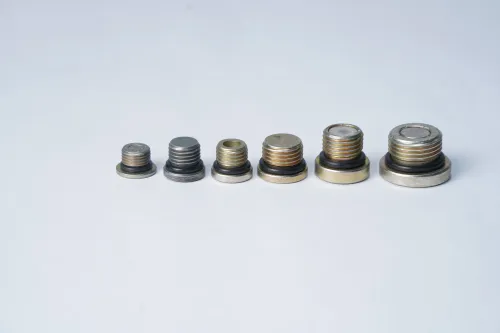

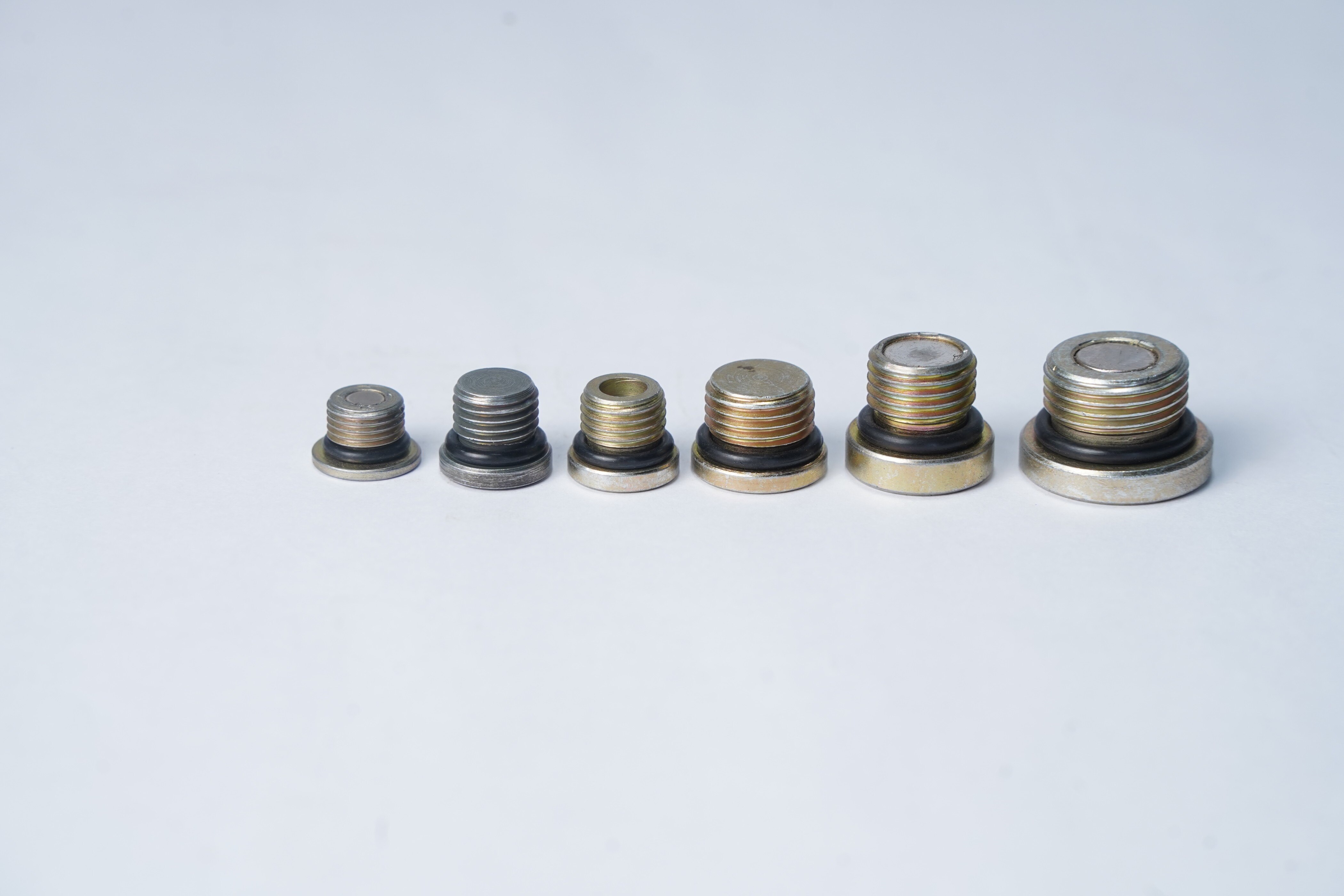
A magnetic pipe plug needs more than an occasional wipe: loosening, seal damage, corrosion and a sudden change in captured debris can all signal a developing equipment fault. You will be able to verify fit, clean and recover the plug safely, interpret contamination, and document maintenance against the equipment maker’s requirements.
Key takeaways
- Verify thread, pressure, temperature, clearance and fluid compatibility before installation.
- Inspect for leakage, loosening and magnet damage on a documented schedule.
- Clean captured debris with a method that prevents contamination from re-entering the system.
- Recover dropped plugs with controlled retrieval tools to avoid foreign-object damage.
Verify the plug, port and installation method before service begins
Confirm the actual port before choosing a plug; nominal diameter alone does not prove compatibility. Check the thread standard and size, engagement length, port geometry, pressure and temperature rating, fluid compatibility, magnet clearance, and access for future removal.
- Identify the sealing design: tapered thread, parallel thread with an O-ring or bonded seal, or a metal seat. Use that plug’s specified torque, not a value copied from another design. Excessive torque can split a female NPT port; tightening a parallel thread cannot correct a misplaced seal.
- Start the plug by hand. Stop if it cross-threads, then inspect for torn crests, galling, or raised material. Stainless-on-stainless threads need particular care because galling can prevent the plug reaching its sealing position.
- Apply only process-approved sealant or anti-seize within its temperature range. Keep it out of hydraulic, instrumentation, and other clean passages. Follow the manufacturer’s dry or lubricated torque instruction consistently because lubricant changes clamp load.
- Confirm that the magnet is retained, clear of the fluid passage, and covered by the complete assembly’s pressure and temperature rating. Record the material, thread, seal type, torque instruction, pressure rating, and installation date.
For pipe plug maintenance germany procedures, use these recorded facts rather than a generic checklist. A correct installation prevents later leakage, loosening, damaged threads, and magnet failures from being mistaken for routine maintenance.
Inspect for leakage, loosening and magnet damage on a defined schedule
Set the inspection interval from the equipment maker’s instructions, pressure, temperature, vibration and contamination risk. Inspect sooner after commissioning and after any abnormal pressure event. Record the date and findings so a gradual leak or movement is not mistaken for a sudden failure.
- Identify the fluid, isolate the equipment, lock out relevant energy sources and verify zero pressure using the maker’s pressure-release procedure. A hydraulic, pneumatic, steam or process-line plug can be ejected when loosened.
- Check for leakage, movement from the installed position, corrosion, damaged threads, seal cuts, flattening, extrusion and embedded particles. Look for a loose or chipped magnet under bright lighting.
- Remove the plug without dropping debris into the port. Collect oil, petrol, coolant or hydraulic fluid in a labelled container and use the approved disposal route.
- For magnetic pipe plug cleaning, wipe the magnet with a lint-free cloth or soft non-magnetic scraper. Use solvent only after confirming compatibility with the magnet coating, elastomer, plug material, coating and sealant; never strike the magnet or scrape it with hardened steel.
- Replace a nicked, twisted or permanently set O-ring or bonded seal. Clean the sealing face and keep residue out of the line, then reinstall and torque as specified.
- Perform the equipment’s defined leak test; ISO 5208 terminology and procedures apply where specified for industrial valves.
A magnetic pipe plug care Mannheim procedure should name the interval, fluid, cleaning agent, seal type and disposal route. Casual wiping is not a pressure test.
Read the captured debris and choose the right contamination-control method
Record the quantity, colour and morphology of debris at every cleaning. A small, stable amount of fine, dark sludge can match normal ferrous wear; a sudden increase, bright cutting-like particles, flakes or larger fragments requires investigation of gears, bearings, pumps and valves before returning the plug to service.
Classify what you find:
- Fine dark sludge: compare it with previous records and inspect for a rising trend.
- Bright curls, needles or cutting-like particles: check for active machining, scoring or component damage.
- Flat flakes or large fragments: inspect gears, bearings, pumps and valves immediately.
- No magnetic debris: do not assume a clean line; aluminium, copper, brass, austenitic stainless steel, many non-magnetic tool steels and non-metallic debris can pass the magnet.
| Method | Capture and limitation | Choose it when |
|---|---|---|
| Magnetic pipe plug | Low-capacity local ferrous capture with little pressure drop; needs access and cleaning | Local ferrous monitoring matters |
| Standard drain plug | No magnetic capture | Debris monitoring is unnecessary |
| Inline magnetic filter | Continuous ferrous capture; adds pressure drop and needs a correctly sized housing | Flow filtration and a defined service interval are available |
| Strainer | Captures larger particles across more material types; mesh, pressure-loss and cleaning limits apply | Non-ferrous or larger debris matters |
| Permanent magnetic trap | Higher capacity and continuous protection; needs space, isolation and a service point | Ongoing ferrous protection is required |
Choose another method for non-ferrous debris, high-flow filtration or an inaccessible port. For magnetic pipe plug for maintenance Mannheim or magnetic pipe plug care Mannheim, specify the actual method, not the location label. Use gravimetric or microscopic analysis, or ISO 4406 for hydraulic fluid, when a cleanliness target applies.
Recover a dropped plug without creating foreign-object damage
Stop the equipment, isolate every relevant energy source, lock out the equipment and verify zero pressure before magnetic pipe plug recovery. A plug in a hydraulic, pneumatic, steam or process line can eject when loosened.
Establish the retrieval limit before inserting a tool. Pipe-wall thickness, scale, bends, non-magnetic sections, internal baffles and the air gap reduce magnetic attraction.
| Method | Strength | Limitation |
|---|---|---|
| Retrieval magnet on rigid, rated rod | Reaches narrow passages | Attraction falls through walls, scale and air gaps |
| Positive mechanical grab | Holds the plug without magnetic reliance | Must fit the passage and avoid precision surfaces |
| Tethered tool | Limits tool loss where permitted | Requires a suitable attachment point |
Protect valve seats, orifices, servo clearances and precision passages from both the plug and retrieval tool. Do not rely on magnetic attraction alone in a safety-critical or inaccessible line.
After recovery, account for the plug, seal, magnet insert and retaining feature. Inspect under bright lighting for a chipped magnet, loose insert, damaged retainer, distorted sealing face or corrosion beneath the coating. A loose insert is foreign-object debris; replace the assembly or obtain the manufacturer’s assessment instead of reinstalling it.
Use a borescope, inspection camera or approved access inspection method to confirm that no fragment remains. Flush or clean the line only under the equipment maker’s procedure, then verify the specified cleanliness test and leak-test result.
Document the maintenance record and decide when replacement is justified
A German maintenance record must identify the actual component, not rely on labels such as “pipe plug maintenance Germany” or “magnetic pipe plug for maintenance Mannheim.” Keep it with the equipment history and update it after every removal.
1. Record the equipment identifier, port location, plug drawing or part number, thread standard and size, material, seal type, fluid, pressure, temperature, removal date, torque instruction, cleaning agent, debris description, photographs, leak-test method and result, and next inspection date.
2. State how oil, petrol, coolant or hydraulic fluid was collected, labelled and transferred through the approved waste or recycling route. Attach the equipment maker’s lockout and pressure-release confirmation.
For EU pressure equipment, check the assembly’s conformity documentation, operating limits and inspection instructions; Directive 2014/68/EU applies to specified pressure equipment and assemblies placed on the EU market.
3. Replace the plug if threads are torn or galled, the sealing face is distorted, the seal no longer recovers, corrosion reaches the coating or base material, or the magnet is loose, chipped or weakened. Treat a loose insert as foreign-object debris.
4. Before ordering, recheck port geometry, access, magnet clearance, pressure and temperature rating, fluid compatibility and capture capacity. If no standard part meets them, Efficient Precision & System Pvt.Ltd can translate the drawing, thread, material, sealing and retention requirements into a repeatable machined component.
Related product
 | Sliding head parts A Magnetic Pipe Plug is a specially constructed plug that seals pipe holes while also attracting and trapping ferrous (iron-based) particles in... View product → |
Frequently asked questions
What must you verify before installing a magnetic pipe plug?
Confirm the thread standard and size, engagement length, port geometry, pressure and temperature ratings, fluid compatibility, magnet clearance and future removal access.
How should you inspect a magnetic pipe plug after installation?
Check for leakage, loosening, thread damage, seal deterioration and magnet damage at a defined inspection interval, then record the findings.
How do you clean debris from a magnetic pipe plug?
Remove the plug under controlled conditions, collect the captured debris, identify its type and source, then clean the magnet without returning contamination to the system.
How can you recover a dropped magnetic pipe plug safely?
Stop work, control the opening, use a suitable magnetic or mechanical retrieval tool, verify the plug is intact and inspect for foreign-object damage.
When should you replace a magnetic pipe plug?
Replace it when threads, sealing surfaces or the magnet are damaged, when leakage continues, or when inspection records show unreliable retention.