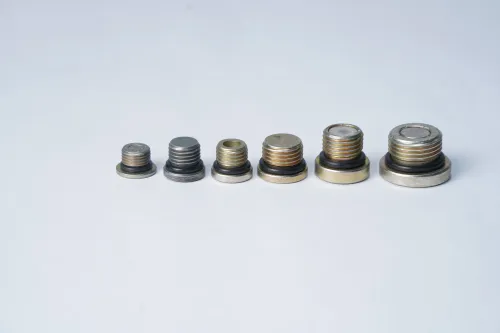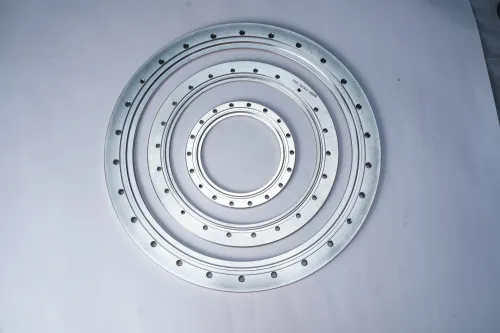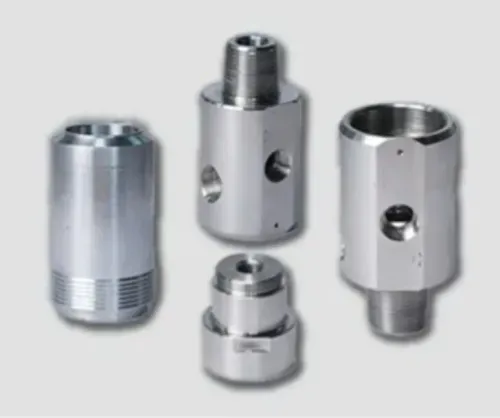

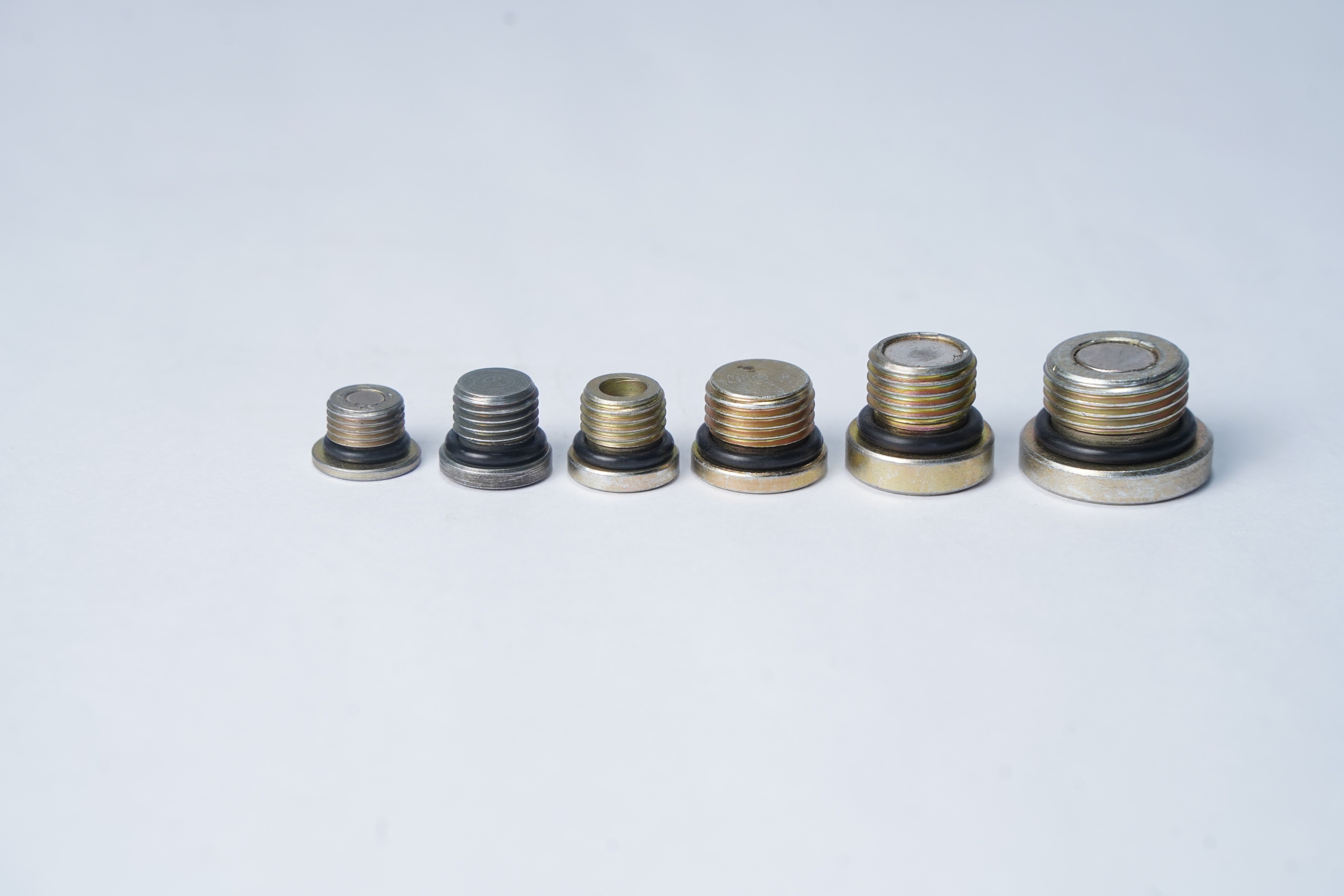
The magnet does not make a pipe plug a higher-pressure sealing device: pressure containment still comes from the plug material, thread form, fit and sealing method. By comparing debris behaviour, inspection work, clearance, temperature, pressure and failure modes, you can specify the right plug instead of paying for magnetic capture where it cannot help.
Key takeaways
- A magnet improves metal-debris capture, not the plug’s pressure rating.
- Magnetic plugs capture ferrous particles but miss aluminium, brass, copper and nonmetal debris.
- Specify thread, seal, temperature, pressure, magnet strength and service access before ordering.
- Choose a standard plug when debris capture is unnecessary or cleaning access is limited.
What changes when you replace a standard plug with a magnetic plug?
Replacing a standard plug with a magnetic plug changes contamination control, not automatically sealing performance. Both can use the same body, thread form and sealing arrangement, so the magnet does not increase pressure capability by itself.
| Factor | Standard pipe plug | Magnetic pipe plug |
|---|---|---|
| Sealing | Seals through the same thread, O-ring, bonded seal or washer design | Seals through the same arrangement; the magnet adds no sealing function |
| Ferrous-debris capture | Captures nothing | Collects nearby iron and steel particles at a local inspection point |
| Inspection effort | No collection surface to clean or inspect | Requires cleaning and recording particle quantity, colour, texture and accumulation rate |
| Pressure and temperature suitability | Depends on assembled material, fit, thread and seal rating | Depends on those same ratings, plus the magnet, coating and retaining assembly |
| Purchase cost | Lower cost and fewer parts | Higher cost because of the magnet and its retention |
| Failure modes | Thread damage, leakage or seal failure | Those failures, plus reduced bore clearance, a loose or cracked magnet assembly, demagnetisation or obstruction |
Choose the magnetic design when ferrous wear or machining debris needs visible monitoring at that port. Choose the standard design for a clean, sealed port, nonmagnetic contamination or a passage that the magnet could obstruct.
In either case, verify the assembled plug’s rated pressure, temperature, material and sealing method; never infer them from the presence of a magnet.
Which metal debris will the magnet capture, and where will it miss?
A magnetic plug is the best pipe plug for metal debris only when the contamination is predominantly ferromagnetic. It attracts carbon-steel chips, iron particles and many tool-steel fragments, but it will not reliably collect aluminium, brass, copper, carbide, ceramic, polymer or most austenitic stainless-steel debris, including common 304 and 316 particles.
| Material | Magnetic plug | Standard plug |
|---|---|---|
| Ferrous debris | Collects particles that pass close to the exposed pole | Does not collect them |
| Nonferrous debris | Misses aluminium, brass, copper, carbide, ceramic and polymer | Also misses them |
| Austenitic stainless steel | Usually misses 304 and 316 particles | Misses them |
| Mixed contamination | Needs a screen, strainer, settling point or nonmagnetic filter as well | Needs the same broader control plan |
Treat the magnet as a point collector, not a system-cleaning device. Fine particles moving through high-velocity coolant can pass the pole, while dead legs, narrow passages, upstream pockets and sludge retain debris elsewhere. A magnet in a low-flow sump can collect effectively, but that result does not prove the circuit is clean.
Inspect the quantity, colour, texture and accumulation rate at each service interval. A sudden increase in bright steel flakes can indicate tool wear, component wear or a contamination event. An empty magnet cannot rule out aluminium, brass, copper, stainless-steel debris or abrasive dust.
Position, exposed pole area and cleaning interval matter more than a headline pull-force figure alone.
How do you specify the plug before ordering it?
State the industrial magnetic pipe plug as an assembled design, not merely by nominal bore size. Name the thread standard and size; similar nominal sizes are not interchangeable.
| Thread standard | Thread form and reference | Identification to state |
|---|---|---|
| NPT | ASME inch tapered thread | Exact NPT size |
| BSPP/G | Parallel thread associated with ISO 228-1 | Exact G size |
| BSPT/R | Tapered thread associated with ISO 7-1 | Exact R size |
| DIN 906 | Countersunk tapered-thread plug | DIN 906 design |
| DIN 908 | Cylindrical parallel-thread plug with sealing ring | DIN 908 design |
Include thread engagement and plug material, plus the pressure rating, temperature range and fluid compatibility. Tapered threads commonly seal through thread interference with compatible sealant or tape; parallel threads require a specified O-ring, bonded seal or sealing washer at the face or shoulder.
- Specify magnet material, magnetic pull, exposed magnet length, pole area, magnet diameter and expected debris type.
- Give assembled insertion depth, head height, access tool, removal clearance and bore clearance behind the port.
- State whether repeated cleaning could damage the magnet, coating or retaining assembly.
- Do not treat headline pull force as a capture guarantee in fast coolant; exposed pole area and flow conditions control collection.
How should you install, remove and inspect a magnetic plug?
Prevent installation damage by treating the magnetic plug as a sealing component first and an inspection tool second.
1. Isolate and depressurise the equipment before work. Clean the port completely, removing chips, old sealant and sludge.
2. Inspect the internal and external threads for cross-threading, galling, crushed crests and damaged sealing faces. Do not use torque to compensate for a damaged thread.
3. Confirm that the magnet fits the available bore, including its diameter and insertion depth. Ensure it cannot strike a shaft, valve, impeller or other moving internal part.
4. Apply only sealant or tape compatible with the fluid, temperature and thread design. A tapered thread commonly needs approved sealant or tape; do not add sealant to a parallel-thread joint designed for an O-ring or sealing washer.
5. Start the plug by hand so the threads engage cleanly. Tighten it with a calibrated tool to the equipment or plug manufacturer’s specified torque. Never grip the magnet as a wrench surface or hammer the plug into place.
6. For removal, withdraw the plug without scraping the magnet across the port. Collect the debris instead of wiping it away, then record the date, operating hours, quantity, colour and texture.
7. Check for bright flakes, coarse fragments or a rising accumulation rate. Clean the magnet with a suitable lint-free method, replace any cut, flattened or hardened O-ring, bonded seal or washer, and replace a cracked, loose or demagnetised assembly.
A clean magnet does not prove the system is clean; nonmagnetic particles and trapped debris remain invisible.
When is a standard plug the better purchase for your equipment?
Choose a standard plug when contamination is mainly aluminium, brass, copper, carbide, ceramic, polymer or abrasive dust. Add a coolant filter, screen, strainer, settling point or other nonmagnetic collection stage; a magnet will not reliably capture these materials or most debris from 304 and 316 stainless steel.
Use the standard design when internal clearance is tight. A projecting magnet can narrow a slender hydraulic, lubrication or coolant passage, and a loose assembly can become a hazard inside moving or precision equipment. Choose it when service temperature exceeds the rating of the magnet, adhesive, coating or retaining assembly.
1. Inspect the actual flow path on a sliding-head CNC or multi-axis machine. Order a plug only if chips or wear particles reach that port; dead legs, upstream pockets and narrow passages can retain contamination elsewhere.
2. Check the assembled insertion depth, magnet diameter and bore clearance against moving parts. Do not select by nominal thread size alone.
3. Treat the plug as one inspection point, not a replacement for a coolant filter, chip conveyor, flushing operation or full-system contamination procedure.
4. If you search “magnetic pipe plug supplier Germany,” send a written specification listing the DIN or ISO design, thread and size, engagement, seal type, material, fluid, pressure, temperature, magnet type, pull data, dimensions and inspection access.
Efficient Precision & System Pvt.Ltd can help when controlled dimensions are needed for a plug or related small component, but the service conditions must determine the design.
Related product
 | Sliding head parts A Magnetic Pipe Plug is a specially constructed plug that seals pipe holes while also attracting and trapping ferrous (iron-based) particles in... View product → |
Frequently asked questions
What changes when you replace a standard pipe plug with a magnetic plug?
The plug adds a magnetic collection point for ferrous debris. It does not automatically improve pressure capability, thread strength or sealing; those depend on the body, thread and sealing arrangement.
Which metal debris will a magnetic pipe plug capture?
It captures ferrous particles such as iron and many steel fragments. It will not capture aluminium, brass, copper, stainless grades with weak magnetic response, nonmetal particles or dissolved contaminants.
How do you specify a magnetic pipe plug before ordering?
Specify the thread standard and size, plug material, sealing method, pressure and temperature limits, magnet type and strength, exposed magnet dimensions, installation tool, and access for inspection and cleaning.
How should you install, remove and inspect a magnetic pipe plug?
Clean the port and threads, use the specified seal, tighten to the manufacturer’s torque, and avoid damaging the magnet during installation. Isolate and depressurise equipment before removal, then inspect the magnet, threads, seal and collected debris.
When is a standard pipe plug the better purchase?
Choose a standard plug when the system has no ferrous-wear risk, the contamination is nonmagnetic, magnetic collection could obstruct flow, or the lower-cost design provides sufficient sealing and access.