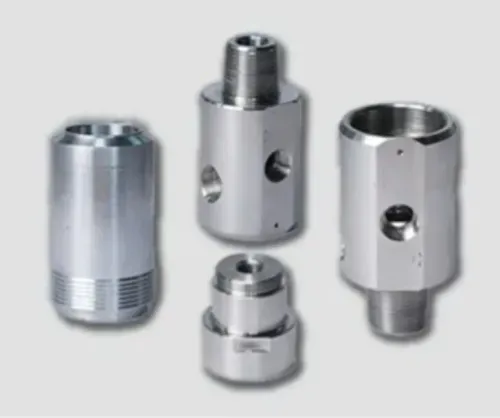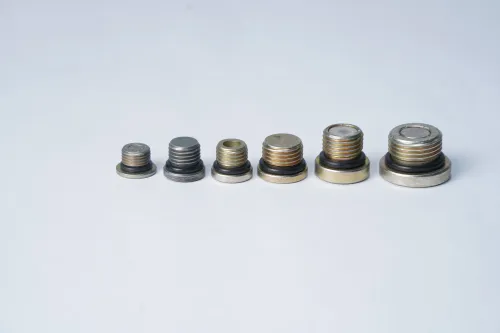


A small CNC component can carry surprisingly demanding specifications. Multiple diameters, grooves, threads, cross holes and tight dimensional tolerances may all have to fit within a part only a few millimetres or centimetres long. Producing such parts repeatedly is where specialised machining methods begin to matter.
The production of sliding head CNC components is particularly suited to components that combine small diameters with intricate geometries. In a sliding head CNC arrangement, the material moves through a guide bush and remains supported close to the machining area. This can help minimise deflection when slender sections are being turned.
But geometry is only one part of the discussion.
Modern component buyers increasingly want fewer secondary operations, consistent batches and dependable dimensional control. Multi-axis capabilities can allow turning, drilling, threading, grooving and other operations to be completed within a carefully planned machining cycle. Reducing unnecessary component handling can also reduce opportunities for variation between operations.
Consider a precision shaft with several diameters, a thread at one end and cross-drilled features. Producing these features through several independent setups could increase handling and alignment requirements. A well-planned CNC sliding head process may consolidate multiple operations, depending on component geometry.
Material selection also influences the process. Stainless steel, alloy steel, brass, aluminium and other engineering materials behave differently under cutting forces and heat.
Cutting tools and machining parameters therefore need to be selected according to the actual material and tolerance requirements rather than following a one-setting-fits-all approach.
For manufacturers sourcing precision parts in Pune, Efficient Precision & System Pvt.Ltd supports component manufacturing requirements where drawing interpretation, machining strategy and dimensional consistency need to work together.
The question isn't simply, "Can this component be machined?" A better question is, "What machining method makes sense for this geometry, tolerance and production quantity?"
For a component-specific discussion, share your technical drawing and production quantity to evaluate the most appropriate manufacturing route.