
A bracket adaptor is not defined by its outside shape; it is defined by the interfaces, loads and alignment it must preserve between a valve, actuator and supporting structure. By the end, you will know which dimensions and documents to request, how to judge machining capability, and how to compare quotations from bracket adaptor manufacturers in Pune.
Key takeaways
- Define the adaptor as a mounting interface, stem drive, or structural support bracket.
- Provide mounting dimensions, loads, alignment limits and operating conditions before requesting quotes.
- Match material selection with machining controls, tolerances, surface finish and inspection methods.
- Compare suppliers using capability evidence, repeatability data and total approval effort.
Define the adaptor before you ask for a quotation
A bracket adaptor is not one universal part. Define whether you need an actuator-to-valve mounting interface, a stem or drive adaptor, or a structural support bracket before requesting a quotation.
| Function | What it does | Do not confuse it with |
|---|---|---|
| Mounting adaptor | Transfers the actuator flange pattern and drive geometry to the valve | A coupling, which transfers torque between shafts |
| Stem or drive adaptor | Matches the actuator drive to the valve stem or shaft | A spacer, which changes distance or centre height |
| Structural support bracket | Supports or positions the valve-actuator assembly and carries reaction loads | A mounting plate that only provides a bolt pattern |
For ball, butterfly and plug valves, a quarter-turn actuator rotates the stem through a defined angle, so the drive shape, flange pattern and angular clocking control the load path. A control valve with a linear actuator uses stem thrust, guide alignment and centre height instead; its bracket geometry is not interchangeable with a quarter-turn arrangement.
ISO 5211 provides attachment dimensions for part-turn actuators and driven components. It does not provide every valve-body, pipeline-flange or support-bracket dimension, so an ISO 5211 designation is not a complete drawing.
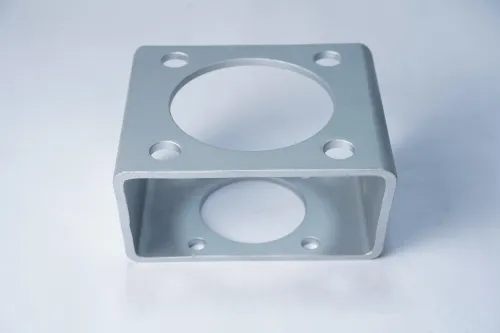
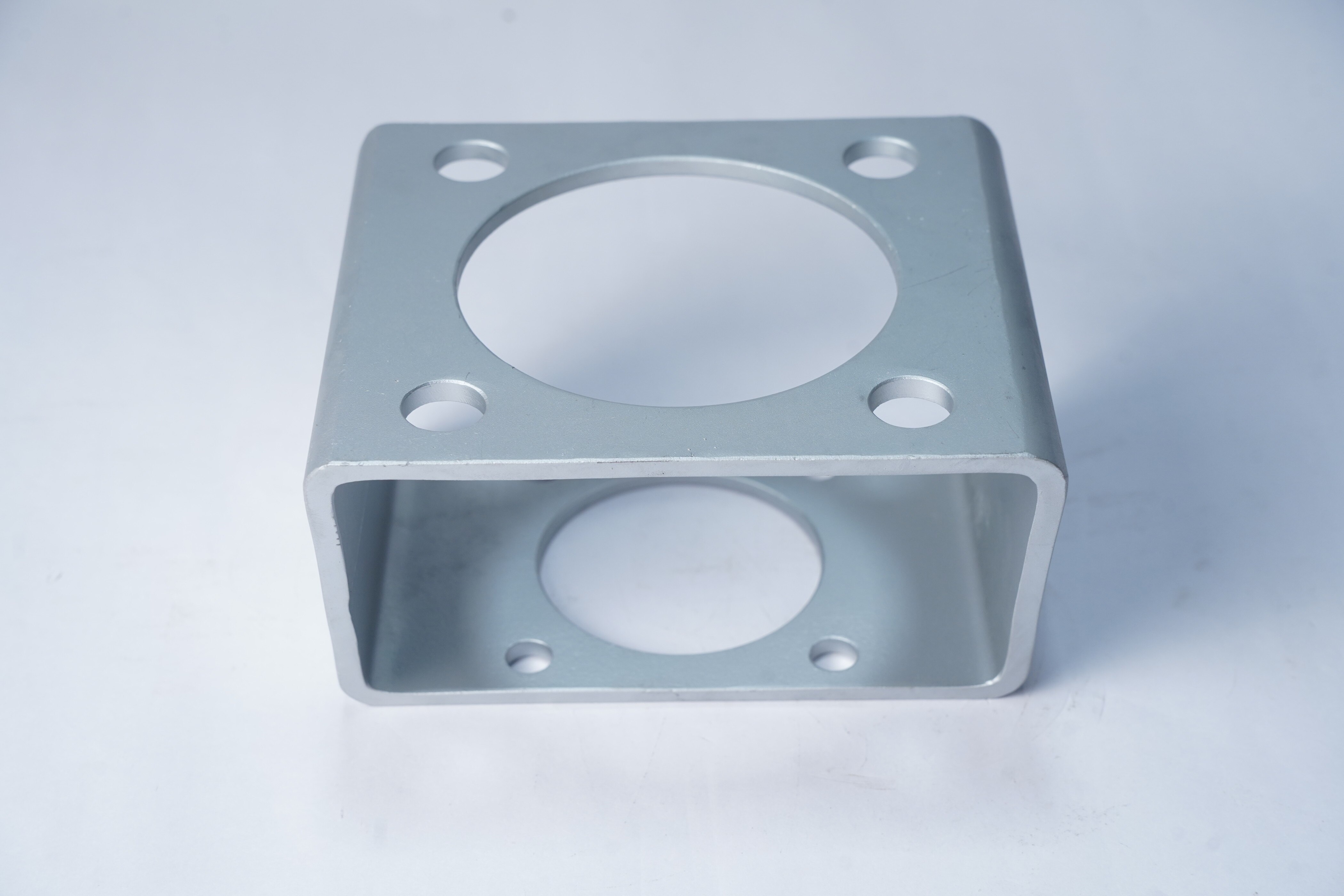
Provide the valve model, actuator model, interface designation and required angular orientation. Also state whether the industrial bracket adaptor in Pune must transmit torque, support dead weight, change centre height or accommodate a separate coupling. That definition prevents a part from bolting on while the stem, load path or actuator travel remains wrong.
Give the manufacturer a fit and load definition
Define fit by the complete interface, and define load by the forces the adaptor must carry. Record these dimensions:
- Actuator flange designation, bolt-circle diameter, number and size of holes, pilot or register diameter, mounting-hole position, centre height and adaptor thickness.
- Drive-square or drive-bore size, shaft or stem profile, keyway width and depth, clearance zones and angular clocking.
- Allowable misalignment and the datum from which runout is measured.
Send the controlled 2D drawing, revision-controlled 3D CAD file, sample part, valve model number and actuator model when requesting a custom bracket adaptor in Pune. The 2D drawing must define tolerances and acceptance criteria. Treat the 3D model as supplementary unless you use a formal model-based-definition workflow.
State design torque, thrust, side load, lever arm, bolt grade and material or heat-treatment condition. A hole-pattern match alone is inadequate: the adaptor can carry actuator reaction torque and dead weight, while a missing pilot or incorrect orientation can cause runout, actuator travel error or fixture interference.
| Definition | What it confirms | What goes wrong if omitted |
|---|---|---|
| Hole pattern | Bolting alignment | Fasteners do not seat |
| Pilot and drive geometry | Concentric torque transfer | Runout or travel error |
| Load and material condition | Structural capacity | Deflection or fatigue failure |
| Clocking and clearance zones | Operating orientation | Fixture interference |
Give bracket adaptor manufacturers in Pune these inputs before comparing quotations. A drawing that only copies the bolt circle does not define a functional part.
Choose material and machining controls together
Choose the material from the service condition, then set machining controls around the load path. A carbon-steel adaptor suits protected environments where strength and cost matter. Stainless steel SS 304 or SS 316 suits corrosion resistance and cleanability; SS 316 is the stronger choice for chloride exposure. Alloy steel suits torque, fatigue and wear.
Aluminium reduces weight and machines easily when loads and the environment permit it.
| Material | Primary advantage | Use when |
|---|---|---|
| Carbon steel | Strength and low cost | The assembly stays protected from corrosion |
| SS 304 | Corrosion resistance and cleanability | General corrosive or hygienic service |
| SS 316 | Greater resistance to chlorides | Marine, chemical or chloride-bearing service |
| Alloy steel | Higher strength, fatigue and wear resistance | Torque, cyclic loading or contact wear controls |
| Aluminium | Low weight and good machinability | Weight matters and loads and environment permit it |
“SS316” does not define surface condition or post-machining treatment. Specify passivation, electropolishing, plating or coating separately because each can change dimensions, edge condition, corrosion performance and cleanliness.
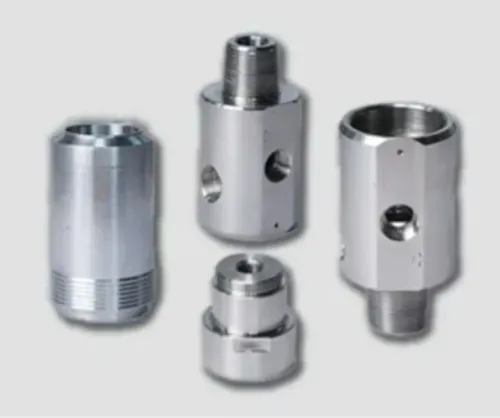
Give a precision adaptor manufacturer in pune a drawing that controls dimensional tolerances, mounting-face flatness, perpendicularity, pilot-to-drive-bore concentricity, hole position, circularity, thread class, full-thread length, entry chamfer, surface finish, deburring and edge-break limits. Ra alone does not control waviness, form, hole location or burrs.
For slender turned parts, identify the critical datum end and state whether runout is checked between centres, against a datum or in the assembled condition.
Test the supplier’s capability, not just the sample part
A sample part proves one setup, not repeatability. Compare a precision adaptor manufacturer in Pune with a general fabrication shop by asking which process matches the part’s diameter-to-length ratio, material, tool reach and runout requirement.
| Process | What to ask | Why it matters |
|---|---|---|
| CNC turning | Can it hold the stem, sleeve or drive diameter and length without deflection? | Controls roundness, bore alignment and surface finish |
| VMC milling | How are faces, bolt holes and registers located from one stable datum? | Prevents pattern and mounting errors |
| Multi-axis machining | How are work offsets, fixture distortion and thermal drift verified? | Preserves relationships between holes, faces and bores |
| Mill-turn or sliding-head Swiss-type CNC | Is the guide bushing suited to this slender component? | Supports small pins, sleeves and stems near the cutting zone |
A sliding-head machine does not automatically guarantee concentricity or finish. Ask how the valve bracket adaptor supplier in Pune controls bar straightness, guide-bushing adjustment, tool wear, thermal growth, remnant handling and pickoff operations.
Request inspection evidence for functional datums, not only overall dimensions:
- Mounting-face flatness, pilot or register diameter, and concentricity
- Drive-bore size, bolt-hole position and angular clocking
- Thread-gauge results and the datum used for each runout check
Useful evidence may come from calibrated micrometers, bore gauges, height gauges, CMMs, optical measurement, or torque and functional fixtures. The supplier need not own every instrument; it must show that the chosen method measures the feature that makes the adaptor assemble and work.
Compare quotations by evidence, repeatability and total effort
A low piece price can conceal fixture, programming, gauging and inspection costs. Compare each valve bracket adaptor supplier in Pune against the same evidence, not against claims such as “robust” or “high quality.”
| Item | Ask for | Cost or risk exposed |
|---|---|---|
| Material | Certificate identifying the supplied heat or cast number; request EN 10204 type 3.1 when traceability matters | Unverified grade or mixed batches |
| Repeatability | Results from more than one batch, with functional datum measurements | First-off success without production control |
| Commercials | Separate setup, tooling and programming charges; minimum batch quantity and bar-remnant policy | Unexpected small-order cost and paid material left unused |
| Quality scope | Mounting-face, pilot, hole-position, thread and angular-clock inspection; state who pays for rework | “Inspection passed” with no usable evidence |
| Change control | Written approval for drawing revision, CAD change, tooling change and deviation | Parts made to an obsolete definition |
For the first article, request the ballooned drawing, dimensional inspection report, material certificate, applicable heat-treatment or passivation records, thread-gauge results and nonconformance disposition. Request a certificate of conformity when your quality system or customer contract requires it.
Efficient Precision & System Pvt.Ltd can be considered for CNC, VMC, sliding-head or multi-axis machining of tight-tolerance valve interfaces and small, slender components. Verify the quoted drawing revision, inspection scope, material records and functional acceptance criteria before releasing the order.
This is how you compare bracket adaptor manufacturers in Pune by repeatability and total effort, not price alone.
Related product
 | Industrial Valve Efficient Precision and System Pvt. Ltd. is a leading supplier, exporter and manufacturer of Valve Brackets based in India. View product → |
Frequently asked questions
What should you define before requesting a bracket adaptor quotation?
State whether you need an actuator-to-valve mounting interface, a stem or drive adaptor, or a structural support bracket. Include interface drawings, mounting dimensions, alignment limits and operating conditions.
What fit and load information does a manufacturer need?
Provide mating dimensions, hole patterns, shaft or stem details, allowable misalignment, static and dynamic loads, torque, temperature, vibration and the required safety factor.
How should you choose material and machining controls together?
Select the material against corrosion, strength, temperature and wear requirements, then specify the tolerances, datum scheme, surface finish, thread controls and inspection method that protect the fit.
How can you compare bracket adaptor manufacturers in Pune?
Request evidence of comparable materials, machine capability, inspection equipment, process controls, first-article results and repeatability. Compare those records with tooling, approval, delivery and rework effort.