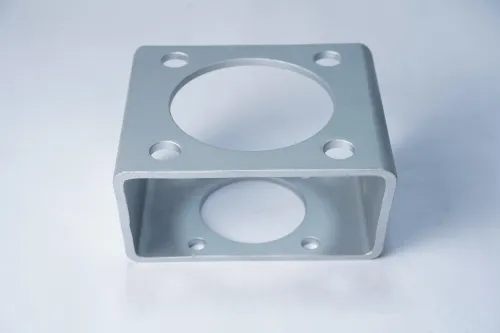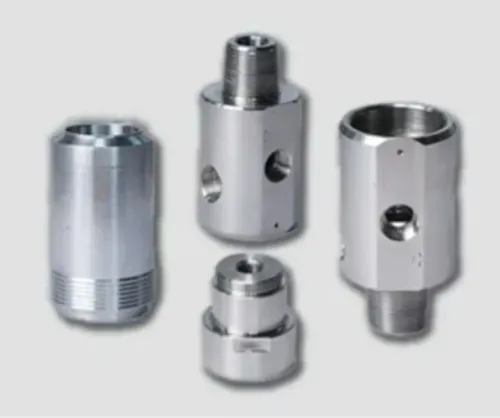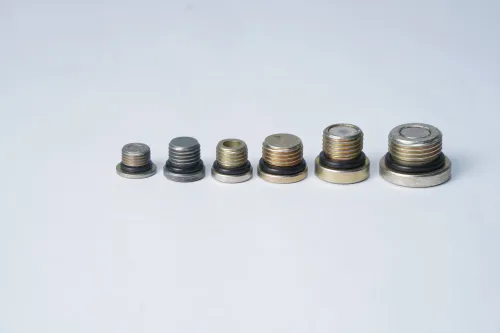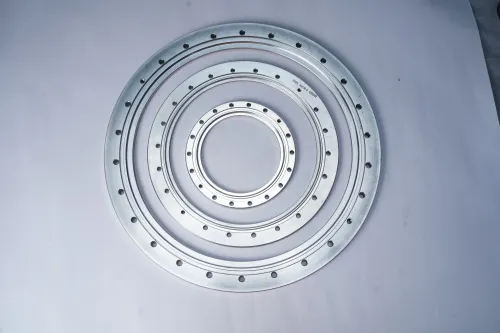

One good component isn't enough in production manufacturing.
If the requirement is 500, 5,000 or significantly more pieces, the important question becomes whether the required dimensions can be maintained consistently throughout the batch. That's why buyers evaluating CNC turned components should consider process repeatability alongside individual sample accuracy.
Consistency begins before the first production part is machined.
The engineering drawing must be reviewed carefully to identify critical dimensions, tolerances, surface requirements, threads and other functional characteristics. Material condition should also be considered because variations in raw material can influence cutting behaviour.
Tooling is another factor. Cutting tools wear gradually during production, and unmanaged wear can cause dimensional drift. Appropriate tool selection, cutting parameters and periodic dimensional checks help maintain process stability.
Then comes machine configuration.
For suitable geometries, sliding head or Swiss-type CNC machines can support complex turning requirements, particularly where small diameters and slender sections are involved. Multi-axis machining may also allow several features to be completed without unnecessary component transfers.
Inspection completes the picture. Measurement isn't simply something performed after manufacturing has finished. In-process checks can identify trends before they develop into larger batch-level problems.
This combination of planning, machining and verification is particularly relevant to Pune's automotive, engineering, industrial equipment and precision manufacturing ecosystem.
Efficient Precision & System Pvt.Ltd approaches precision production with attention to component drawings and application requirements, rather than treating turned parts as generic catalogue items.
If consistency across repeated production batches is important to your project, start the conversation with your drawing, tolerance requirements and expected volumes.