
A retainer ring can fail even when its nominal diameter matches the drawing: a shallow groove, damaged shoulder, pressure surge, corrosion pit or installation error can let a stem, insert or travel stop move. By the end, you will be able to distinguish the failure mode, verify the ring-and-groove fit, inspect the damaged assembly and prepare a replacement specification that matches the valve’s actual loads and service conditions.
Key takeaways
- Inspect the ring, groove shoulder and retained component together.
- Match ring capacity to axial load, pressure and groove dimensions.
- Check ring seating, gap position and axial play before service.
- Specify material, ring type, dimensions and operating conditions for replacement.
How a Failed Retainer Ring Behaves—and What the Damage Reveals
A valve assembly ring failure leaves distinct evidence: examine the ring, groove, and retained component together before replacement. A displaced ring gap, peened groove shoulder, metal fragments, axial play, or leakage from component movement can identify the mechanism.
| Failure mode | Physical evidence | What it indicates |
|---|---|---|
| Ring pull-out | Ring sits outside the groove, with fresh witness marks on the groove shoulder or a polished escape path | Shoulder engagement was lost, often from inadequate groove depth, excessive load, or incomplete seating |
| Fracture | Radial or circumferential break, matching fragments, and a bright or oxidised fracture surface | Overload, fatigue, corrosion pitting, or stress concentration |
| Permanent opening | Ring diameter is enlarged, flattened, or no longer springs back into the groove | Plastic deformation, excessive compression, or pressure-thrust overload |
| Rotation | Circumferential rub marks on the ring and continuous polishing around the groove | Cyclic torque, vibration, or insufficient anti-rotation restraint |
| Preload loss | Ring remains present but has a widened gap, reduced spring force, or measurable axial clearance | Fatigue, overheating, wrong ring size, or material relaxation |
| Retained-part movement | Shaft, insert, or seat shows fretting, impact marks, shifted sealing surfaces, or leakage | The ring allowed axial movement even without visible fracture |
Do not discard burrs, corrosion products, or the mating part. Crevice corrosion, chloride cracking, and a sharp groove defect can leave most of the ring intact while destroying pull-out resistance. These are common industrial valve retainer ring problems, and a generic replacement can repeat the valve assembly ring failure.
The Groove, Load and Pressure Conditions That Overload the Ring
Correct nominal diameter does not prove retention. A shaft or housing groove can leave a correctly sized ring with too little engaged cross-section, allowing axial walk-out under valve thrust. Check these groove conditions:
- Insufficient depth, which leaves the ring proud and easy to dislodge
- Excessive width, which permits axial movement and impact
- Incorrect groove diameter or poor concentricity, which creates uneven loading
- A damaged shoulder, burr, sharp edge, or excessive chamfer, which reduces the supporting land
Pressure thrust can exceed the steady line-pressure load during fast closing, water hammer, a pressure surge, or plug and ball seating. An actuator can add stem force, impact, and bending when torque is transmitted through a misaligned component.
The limiting failure is then groove shear, shoulder deformation, ring bending, or pull-out—not the ring’s tensile strength alone. Size the industrial valve retainer ring against peak axial force and the actual groove shoulder area.
Vibration repeatedly unloads and reloads the contact points, allowing the ring to rotate, fret, or walk toward the groove opening. Thermal cycling adds another path to failure: a ring, stem, body, and groove made from different metals expand at different rates between ambient temperature, hot process service, and washdown.
Preload can disappear, or contact pressure can rise enough to deform the groove. A retainer ring for failure analysis in an industrial valve must therefore be assessed with pressure transients, actuator loads, vibration amplitude, cycle count, and temperature range—not nominal diameter alone.
Choosing the Right Ring Type, Material and Valve Location
Choose the ring by its load path and valve location, not by outside diameter or wire thickness. An internal ring sits in a housing bore; an external ring sits on a shaft or stem. DIN 472 covers internal rings, while DIN 471 covers external rings, and their dimensions are not interchangeable.
| Type | Suitable location | Main limitation |
|---|---|---|
| Internal circlip | Bore retaining an insert, piston or seat carrier | Unsuitable for a shaft groove or inadequate shoulder area |
| External circlip | Stem, shaft or spindle groove | Needs a properly sized shaft groove and installation access |
| Snap ring | Higher axial thrust where a defined heavy-section profile is available | “Snap ring” is not a universal substitute; verify groove and load ratings |
| Spiral retaining ring | Continuous 360-degree retention in a clean, uniform groove | Poor choice where impact, rotation or debris can unwind or displace the coils |
| Custom machined retainer | Non-standard geometry, material, low volume or traceability requirement | Machining does not automatically provide the spring-back or fatigue performance of a formed ring |
Many industrial valve retainer ring problems begin with a generic replacement request. For a retainer ring for failure industrial valve assessment, supply the ring and groove drawings, material and heat treatment, pressure-thrust and actuator loads, cycle count, temperature and fluid.
Match material and finish to the valve location. A ring inside the pressure boundary needs corrosion resistance, pressure-temperature traceability and a surface that will not damage the seal; a ring outside it still needs protection from washdown, process vapour and galvanic contact. Keep sharp edges away from dynamic seals.
Check groove shear and deformation, not material strength alone.
Installation and Inspection Checks That Catch Failure Before Service
A clean groove and a documented seating check catch many valve assembly ring failure causes before pressure or cycling turns them into leakage.
1. Retain the failed ring with its mating shaft, insert or sleeve. Record fracture location, permanent opening or flattening, displaced gap, corrosion products and metal fragments before cleaning.
2. Measure the groove before rework. Check diameter, width, depth and shoulder area against the drawing; inspect for burrs, raised metal, sharp edges, interrupted machining and groove peening. Remove defects without enlarging the groove or weakening its shoulder.
3. Install the specified internal or external ring with the correct tool and expansion or compression limit. Confirm that it occupies the correct groove and contacts the shoulder around its full circumference. A visible gap position does not prove seating; an adjacent component can hide partial seating.
4. Inspect the assembled ring-to-shoulder contact, not only the exposed edge. Look for local gaps, ring deformation, tool damage, fresh witness marks and fragments trapped in the sliding or sealing interface.
5. Measure axial play of the retained component and compare it with the assembly limit. Excess movement can mark the groove, shift a seal and cause leakage that originates from component displacement rather than the ring. Cycle the assembly, then repeat the play, contact and leakage checks.
How to Specify a Replacement Ring and Evaluate a Pune Supplier
A request for retainer ring replacement in Pune must identify the ring and its mating groove as one engineered assembly. Matching outside diameter or wire thickness alone can deliver a part that fits but cannot carry the valve load.
1. Send the ring drawing and mating-groove drawing, or a controlled sample of both. State internal or external configuration, groove width and depth, shoulder diameter, allowable axial play, installation deformation, and required full-circumference seating. DIN 471 external rings and DIN 472 internal rings are not interchangeable.
2. Include material grade, surface finish, heat-treatment or hardness requirement, operating temperature, valve medium, corrosion exposure, pressure, cycle count and inspection standard. Provide pressure-thrust, actuator, stem, impact and vibration loads; the limiting failure may be groove shear or pull-out rather than ring strength.
3. Retain the failed ring with its mating component. Record fracture location, permanent opening, flattened sections, displaced gap, corrosion products, burrs, groove peening and shoulder witness marks before rework.
4. Ask each precision retainer ring manufacturer in Pune for a first-article dimensional report covering ring geometry and the mating groove, including groove-width, groove-depth, concentricity and runout results. Request material certificates, hardness or heat-treatment records, burr-control details and the method used to verify seating around the full circumference.
5. Reject approval based on a gap-position check alone. Efficient Precision & System Pvt.Ltd should be assessed by this traceable ring-and-groove evidence, not by CNC machine count.
Related product
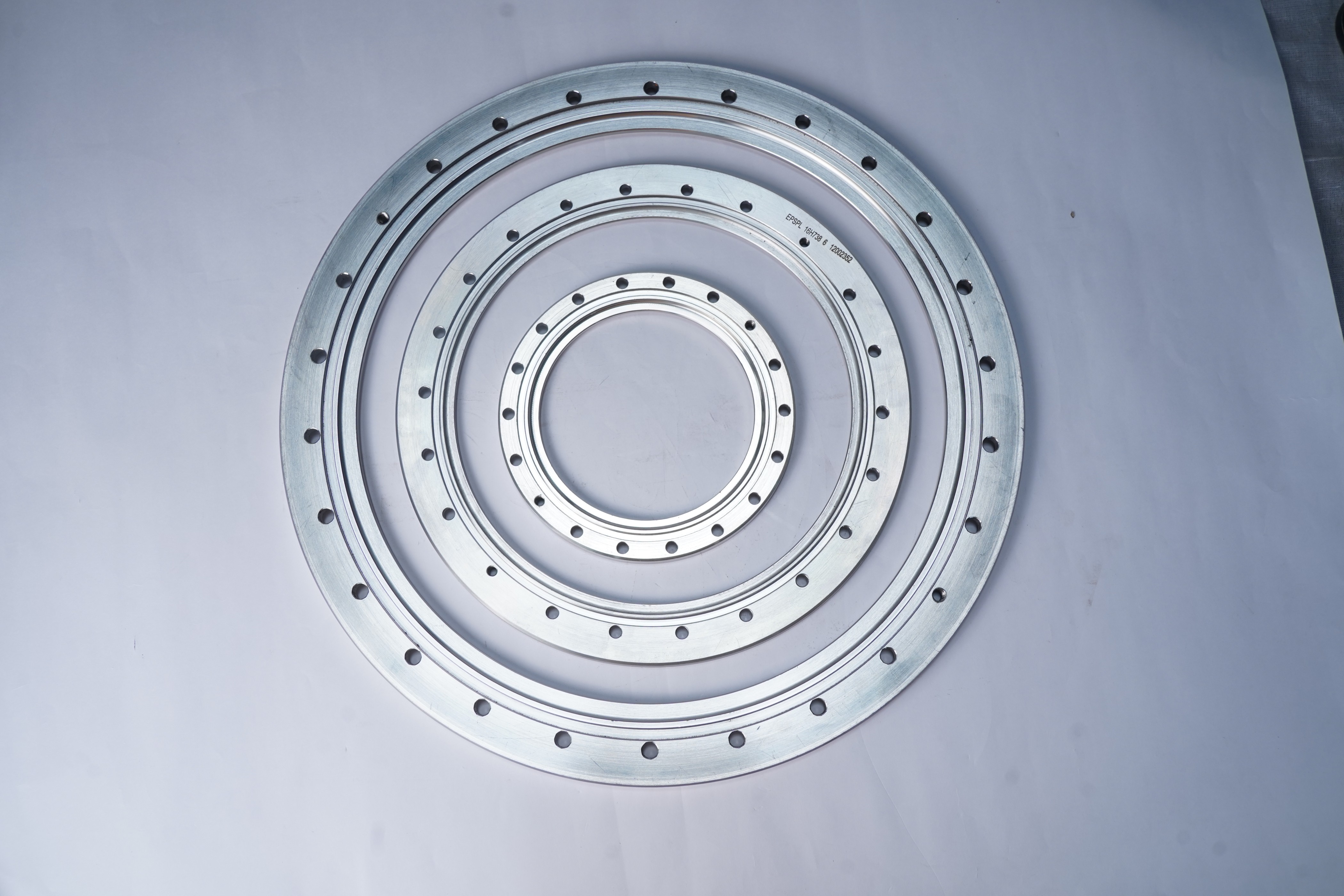 | Industrial Valve Efficient Precision is a leading manufacturer and supplier of quality Retainer rings in India and Germany Years of experience in the industry have... View product → |
Frequently asked questions
What evidence shows that a retainer ring failed in a valve assembly?
Look for a displaced ring gap, peened groove shoulder, metal fragments, axial play or leakage caused by component movement.
Which conditions overload an industrial valve retainer ring?
Excessive axial load, pressure-driven movement, an undersized groove, poor shoulder support or incorrect ring selection can overload the ring.
How do you choose a replacement retainer ring for a valve?
Match the ring type and material to the valve location, groove dimensions, axial load, pressure, temperature and corrosion exposure.
What installation checks prevent retainer ring failure?
Confirm the ring is fully seated, inspect the groove for burrs and peening, position the gap correctly and measure unwanted axial play.
What should you provide when requesting a retainer ring replacement in Pune?
Provide the ring drawing, groove dimensions, material, operating conditions, quantity, inspection requirements and valve application details.