
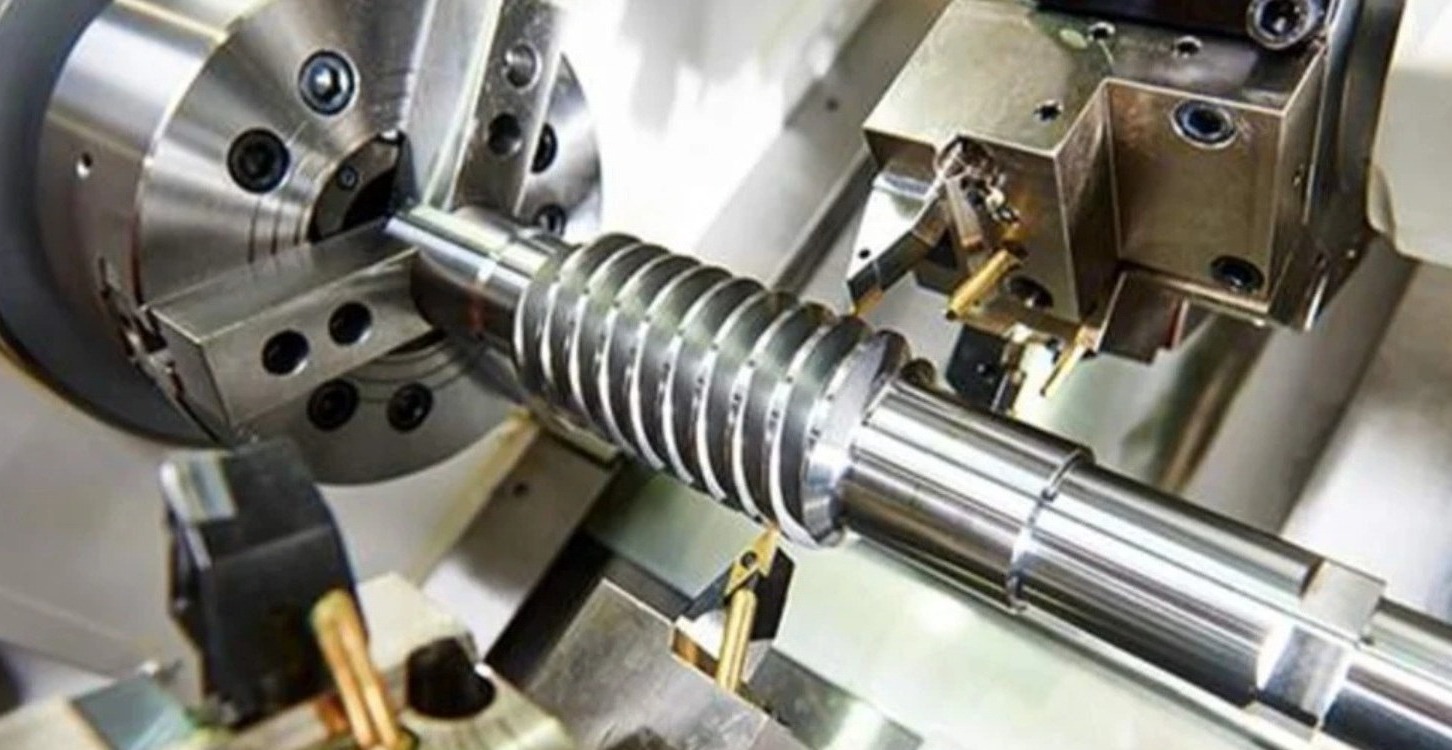
Long, slender shafts present an interesting machining problem. The cutting tool may be accurate, the program may be correct and the raw material may meet specification—yet the component can still deflect while being machined.
This makes long shaft machined components different from short, rigid turned parts.
The length-to-diameter ratio is an important consideration. As a component becomes longer relative to its diameter, unsupported material becomes more susceptible to bending and vibration under cutting forces.
Sliding head machining addresses this issue by feeding material through a guide bush and supporting it close to the cutting area. Rather than machining a long unsupported section, the cutting operation occurs near the support point.
For suitable shaft geometries, this can provide a more stable machining condition.
Other variables still matter. Cutting-tool geometry, depth of cut, material type, speed, feed and feature sequence can influence component behaviour. Long shafts may also contain shoulders, grooves, threads or drilled features that introduce additional process considerations.
Inspection requires equal attention. Diameter may be only one characteristic; straightness, concentricity and feature position can also influence whether the shaft performs correctly in the final assembly.
Efficient Precision & System Pvt.Ltd supports precision machining requirements from Pune, where engineering companies often need customised components rather than standard off-the-shelf parts.
When sourcing slender shafts, buyers can improve technical discussions by sharing complete drawings instead of providing only diameter and overall length. Functional tolerances and material specifications often determine the most appropriate machining route.
Have a long or slender shaft requirement? Send the component drawing for a closer look at manufacturing feasibility.