
A retaining ring can fail even when its nominal shaft or bore size is correct because the ring, groove and retained part share the load. By the end, you will be able to calculate the required retaining capacity, distinguish internal from external designs, verify industrial retainer ring fit and choose a sound replacement after overload or damage.
Key takeaways
- Trace the load from the retained part through the ring and groove wall.
- Choose retention architecture based on impact, vibration and duty-cycle demands.
- Check groove wear, deformation and dimensions before ordering a replacement.
- Specify ring, groove, material and installation details together.
Match the ring to the load path, not just the diameter
A retaining ring provides axial retention; it does not clamp a joint or set bearing spacing. Retainer ring selection for equipment must follow the load path from the retained component into the ring, groove wall and shaft or housing.
- Steady thrust: size for continuous axial force with normal safety margin.
- Reversing thrust: check both groove shoulders; repeated direction changes increase fatigue and pull-out risk.
- Radial side loading: check component tilting and concentrated shoulder contact, because the ring is not a radial bearing.
- Impact: apply a higher dynamic factor; a ring that survives static thrust can escape when struck.
- Vibration and start-stop duty: check fatigue, fretting and loss of radial engagement across repeated cycles.
Use this calculation framework: required capacity = (applied thrust + mass × acceleration) × impact or dynamic factor × safety factor. Use the peak acceleration and peak thrust, not their average values, then compare the result with data for the exact ring and groove.
Diameter alone is inadequate. Check ring shear or bending, groove shear, groove-wall crushing, plastic deformation and pull-out from insufficient radial engagement. A catalog thrust rating does not transfer to a different groove width, depth, shaft material or housing material.
For rotating equipment, validate speed as well as thrust. Centrifugal force can expand an external ring out of its shaft groove and contract an internal ring away from its housing groove. Check the ring, groove wall and retained component as one assembly; that is where retainer ring load failure begins.
Choose the retention architecture for the duty cycle
An external retaining ring expands into a shaft groove and reacts against the shaft shoulder; an internal retaining ring contracts into a bore groove and reacts against the housing shoulder. Select the architecture around access, removal frequency, groove form and operating speed, not diameter alone.
| Option | Best use | Main trade-off |
|---|---|---|
| Internal retaining ring | Bore-mounted parts and protected assemblies | Needs bore access and a correctly formed internal groove |
| External retaining ring | Shafts, pins and exposed components | Needs shaft access; centrifugal expansion matters at high speed |
| Stamped circlip or snap ring | Common service with standard grooves and occasional removal | Plier installation is simple, but lug areas create local contact |
| E-clip | An accessible shaft groove where axial installation is quick | Side entry is convenient; groove access is essential |
| Push-on ring | Rapid assembly where removal is not routine | Fast installation, but replacement often damages the ring or shaft surface |
| Spiral retaining ring | Near-360-degree contact and high-cycle axial loading | Requires controlled groove geometry and different installation procedures |
| Threaded retainer | Shock, repeated service or capacity beyond a thin ring | Stronger load path, with more parts and assembly time |
| Machined shoulder | Permanent or high-capacity retention | Requires extra machining and limits later adjustment |
A stamped circlip and snap ring suit ordinary static or moderate cyclic service when published ring and groove loads match. Use a spiral ring for continuous contact; use a threaded retainer or machined shoulder when shock or repeated removal exceeds a thin ring’s practical limits.
Retainer ring replacement options include an identical standard ring, a spiral or wire ring, or a redesigned retainer. A thicker replacement ring requires a compatible redesigned groove; forcing it into the old groove can reduce seating and groove-wall support. In rotating equipment, validate centrifugal expansion for external rings and contraction for internal rings.
Verify material, environment and industrial retainer ring fit
Carbon spring steel is the economical choice when high strength matters, but stainless steel is not an automatic equivalent. Compare the stainless grade, heat treatment, hardness and supplier allowable-load data with the carbon-steel ring.
Check temperature, hydraulic oil, process fluids, water, chemicals, galvanic couples and coatings together; a coating can alter clearance, while corrosion, fretting and repeated assembly reduce effective section or damage the shoulder.
| Material | Advantage | Checks before substitution |
|---|---|---|
| Carbon spring steel | High strength and low cost | Corrosion protection, temperature limit and coating thickness |
| Stainless steel | Better corrosion resistance | Grade, hardness, heat treatment and published load rating |
| Coated steel | Added environmental protection | Coating adhesion, galvanic compatibility and groove clearance |
Confirm the industrial retainer ring fit against the actual assembly, not the nominal shaft or bore size:
- Shaft or housing diameter, groove diameter, groove width and groove depth
- Ring free diameter and section thickness
- Axial clearance and shoulder geometry
- Full 360-degree contact between ring and load-bearing shoulder
- Burrs, chamfers and excessive edge radius that block seating
- Deburring that removes raised material without reducing or rounding the shoulder
- Reduced groove-root diameter and fatigue strength on slender shafts, pins, valve stems and small machined components
A groove is a stress raiser; the smaller groove-root section can fatigue even when the original shaft diameter appears adequate. Inspect seating visually, because an installation tool closing the ring does not prove correct contact.
Inspect the failed groove before ordering a replacement
After a ring escapes, do not order the same part automatically. A retainer ring load failure can enlarge the groove or damage its shoulder, leaving a new ring with the same nominal size unable to carry the load.
1. Isolate the equipment and remove the ring safely with the correct pliers or extraction method; shield against spring release. Record the ring’s unloaded free diameter and section thickness before cleaning or reshaping it.
2. Inspect the ring and groove under magnification. Look for spreading, burrs, brinelling, cracking, corrosion, fretting, plastic deformation and groove enlargement. Check whether the shoulder is rounded, chipped or tilted; a partially seated ring has sharply reduced capacity.
3. Measure the ring’s installed diameter, then measure the shaft diameter for an external ring or bore diameter for an internal ring. Measure groove diameter, groove width, groove depth, edge radius and available axial space with micrometers, calipers and depth tools; use optical equipment for small or damaged features.
4. Compare the measurements with the ring maker’s drawing and load data, including radial engagement and full shoulder contact around 360 degrees. Do not confuse nominal shaft or bore diameter with ring terminology: DIN 471 identifies external-ring families, while DIN 472 identifies internal-ring families.
A ring that escaped because the groove spread needs a restored or redesigned load path, not simply another ring.
For a retainer ring for problems industrial equipment, verify ring shear or bending, groove shear, wall crushing, pull-out and material loss before reuse; replace the groove or change the retention design when any dimension or shoulder is outside specification.
Specify the replacement without creating a second failure
A final retainer ring replacement requires a documented load path, not a “heavy-duty” label. Give the manufacturer or machinist:
- Load direction, steady and peak thrust, acceleration, impact, reversal, cycle count, vibration and rotational speed.
- Temperature, fluid exposure, corrosion risk, and shaft or housing material.
- Shaft or bore diameter, groove diameter, width, depth, edge radius, axial clearance and shoulder condition.
- Installation and removal access, service frequency, and the required safety factor.
Retainer ring replacement options depend on that record:
| Option | Use when | Critical condition |
|---|---|---|
| Identical standard ring | Duty and groove match catalog data | Inspect the groove first |
| Spiral or wire ring | Continuous contact suits cyclic thrust | Groove accepts the ring |
| Larger-section ring | More capacity is required | Redesign and verify the groove |
| Threaded retainer, shoulder-and-fastener or integral step | Shock, fatigue or service access defeats a ring | Redesign the load path |
Do not install a thicker ring in the old groove. Reduced seating or inadequate groove wall can cause pull-out, crushing or another escape. The ring, groove and retained component must match the published load data.
For retainer ring selection for equipment, Efficient Precision & System Pvt.Ltd. can help check tight-tolerance groove geometry and produce small, slender precision components; the specification must still follow the documented load path. That review is especially important where a groove weakens a small shaft or valve stem.
Related product
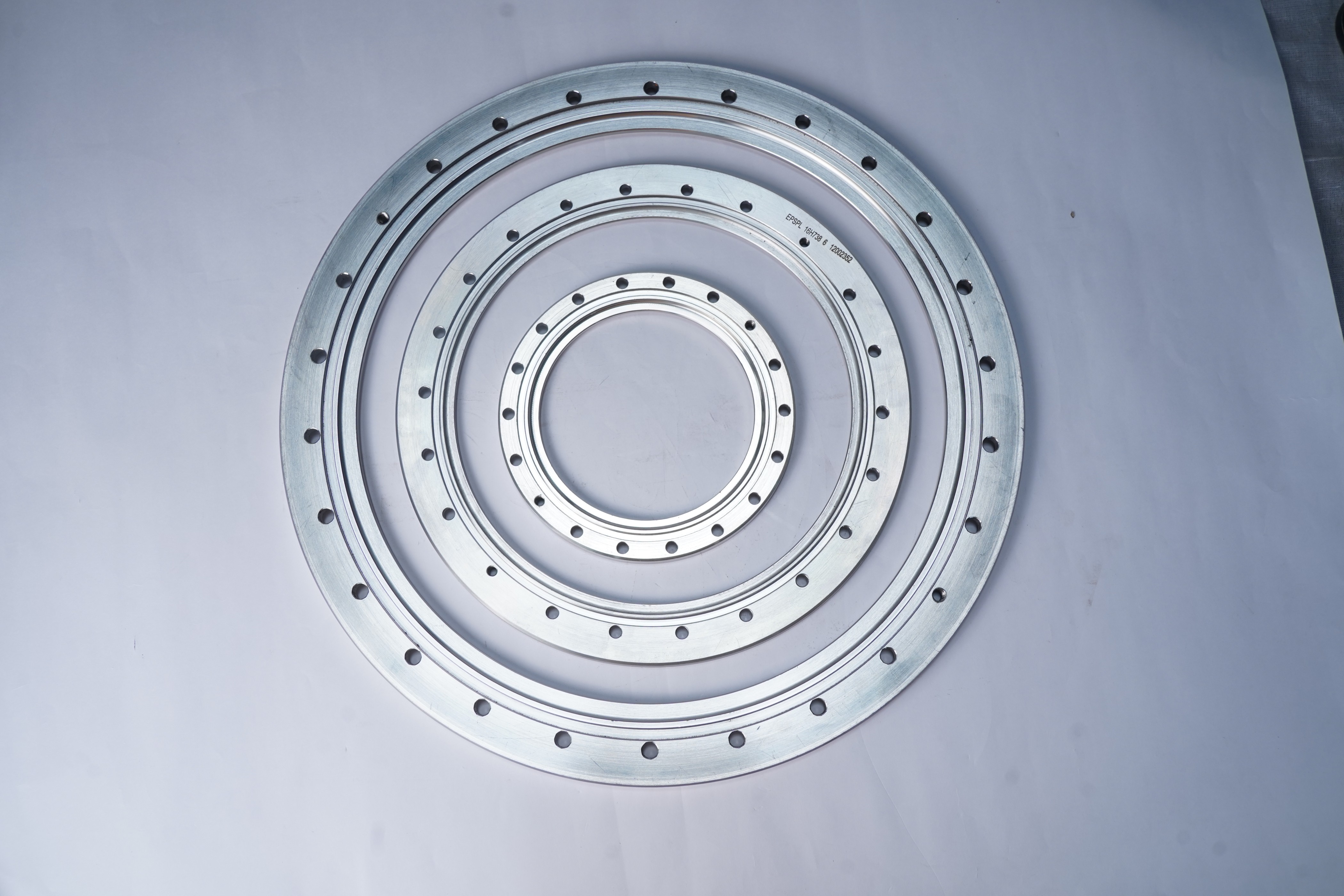 | Industrial Valve Efficient Precision is a leading manufacturer and supplier of quality Retainer rings in India and Germany Years of experience in the industry have... View product → |
Frequently asked questions
How do you match a retainer ring to an industrial load?
Trace the load path from the retained component into the ring, groove wall and shaft or housing. Select the ring and groove as a load-bearing system rather than matching diameter alone.
Which retention architecture suits a demanding duty cycle?
Compare the duty cycle, impact, vibration and expected axial loads before choosing the retention architecture. A design that works under static load can fail under repeated shock or movement.
What should you check for industrial retainer ring fit?
Verify the ring dimensions, groove geometry, material and environmental exposure. Inspect the groove for wear, deformation and damage before approving a replacement.
What should you inspect after a retainer ring failure?
Inspect the groove, groove wall and retained component for peening, spreading, cracking, wear and incorrect dimensions. Correct the underlying load or fit problem before installing a replacement.