
A leak must be traced to its actual source before you choose a plug: threaded port, drain opening, gasket, hose, fitting, casting crack, or damaged seat. By the end, you will know when a magnetic device is a safe temporary containment measure, what specifications to demand, and when a pressure-rated replacement or permanent repair is the only responsible choice.
Key takeaways
- Trace the escape path before choosing a plug or replacement.
- Measure the opening, thread, sealing face and surrounding clearance.
- Check pressure, temperature and fluid compatibility independently.
- Use a magnet only when it improves retention without attracting debris.
Find the leak source before attaching any plug
A magnetic pipe plug for equipment leak problems is useful only when its sealing face covers the actual escape path. Do not assume the nearest hole, fitting or magnetic attraction identifies the source.
1. Isolate the equipment, lock out energy sources, depressurise, drain and vent it, then verify zero pressure. A device that attaches without tools can create a dangerous impression that installation is safe on a live system.
2. Clean and dry the suspected area. Oil tracks, coolant stains and dirt can travel away from the defect, so wipe the surface and inspect the threaded port, drain hole, plug seat, gasket, hose connection, pressurised fitting, casting crack and weld.
3. Trace the leak under a controlled test suited to the fluid. Use visible dye for compatible liquid systems or an approved leak-detection method; never use an unverified temporary repair as the reason to apply pressure. Gas service demands stricter control because a small sealing defect can continuously release flammable or toxic gas.
4. Identify the defect geometry. A plug on a curved small-diameter tube has less contact than one on flat plate, while a seam, pit, crack or irregular weld can let fluid escape around the plug edge. Record outside diameter, wall shape, defect length and available access.
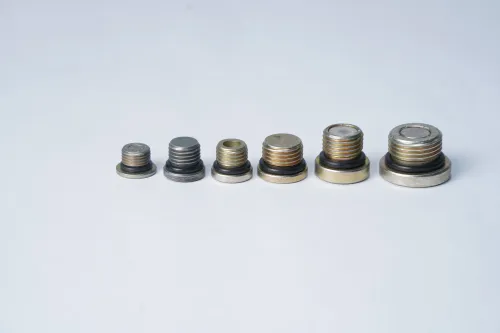
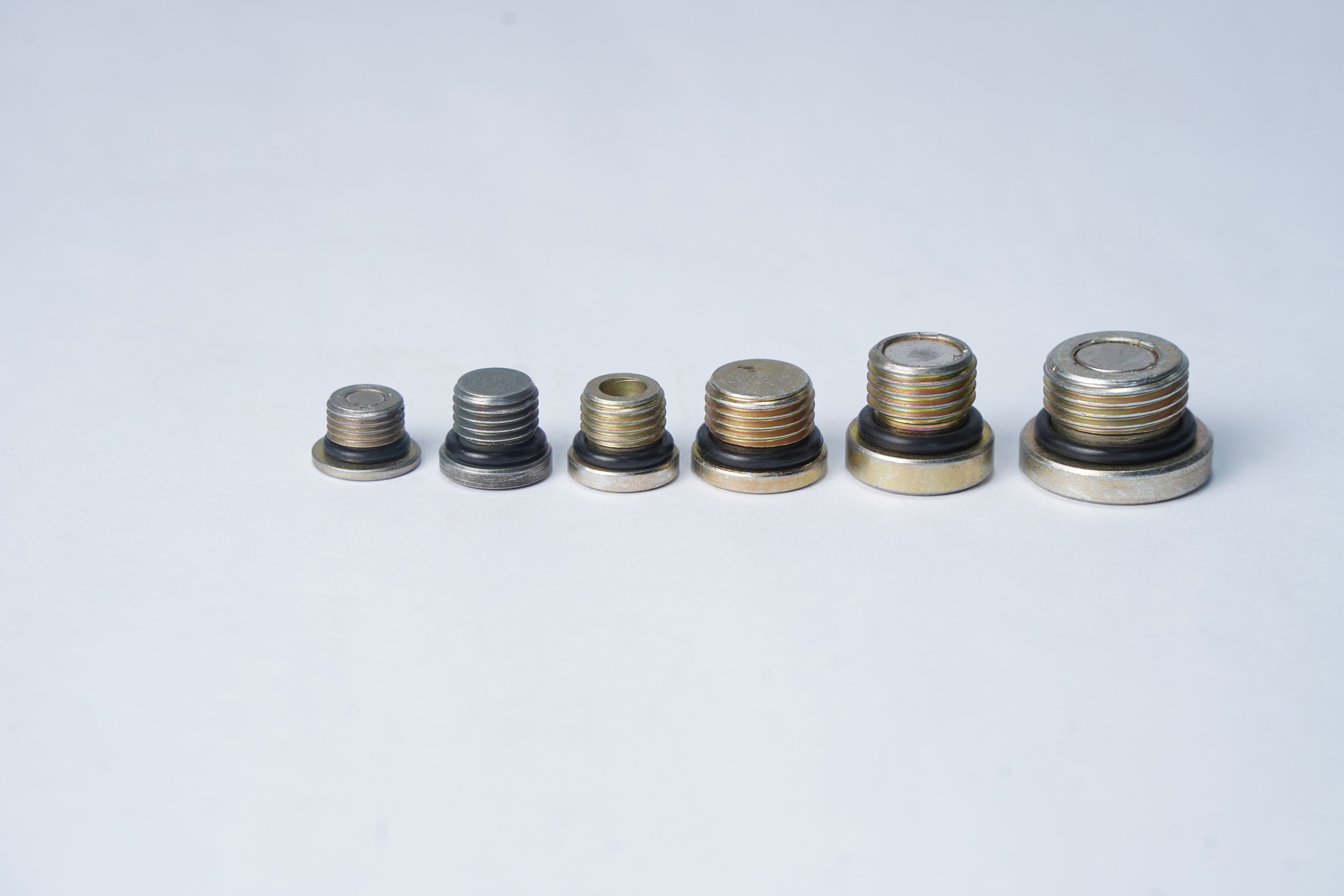
5. Require a drawing before buying a magnetic pipe plug for industrial equipment. It must show the sealing surface, retention method and installation position, and state whether the product is a magnetic patch, internal stopper or threaded plug with a debris-collecting magnet.
Do not select it for compressed gas, vacuum, oxygen, hydrogen or hazardous chemicals without application-specific qualification.
Match the plug to the opening, thread and clearance
A plug seals only when its sealing face and thread match the opening, with enough engagement and clearance to seat without distortion. Measure the actual outside diameter, wall shape, defect length and width, surface roughness or gap, and access envelope; nominal pipe size alone is unreliable on small tubes or valve bodies.
Require a drawing showing the sealing surface and installation position before calling it a pipe plug leak solution.
For a threaded replacement, identify these details from the port and drawing:
- Thread standard: NPT under ASME B1.20.1, BSPP, or BSPT.
- Nominal size, pitch, taper, thread outside diameter, usable thread length, and required engagement.
- Sealing method: thread sealant, O-ring, gasket, metal seat, or flat sealing face.
- Plug length, head diameter, wrench access, and clearance from adjacent walls, hoses, and moving parts.
- Port material and condition, including stripped threads, pitting, a damaged seat, or a crack crossing the sealing area.
A plug that screws in is not necessarily a seal. Wrong pitch or taper can damage the port; inadequate engagement can eject the plug, while excessive length can contact internal parts.
| Plug type | Dimension that controls fit | Failure if mismatched |
|---|---|---|
| External magnetic patch | Seal-face curvature, defect size, surface gap, pull and shear load | Edge leakage or movement |
| Internal magnetic stopper | Bore diameter, insertion depth, retention clearance | Bypass leakage or difficult removal |
| Threaded magnetic plug | Thread form, pitch, taper, engagement, seal face | Port damage or no pressure boundary |
Treat pressure, temperature and fluid compatibility as separate checks
A magnetic pipe plug is suitable only when its exact configuration is rated for the equipment’s pressure, temperature, and service fluid; otherwise, treat it as temporary containment, not a pressure-boundary repair. Magnet engagement alone proves nothing.
Check each condition separately:
- Pressure: Compare the manufacturer’s pressure limit with maximum operating and test pressure, including surges. Do not use an unqualified magnetic pipe plug for compressed gas, vacuum, oxygen, hydrogen, or hazardous chemical service; a small sealing defect can create continuing leakage or a dangerous release.
- Temperature: Verify continuous and peak temperatures at the seal, not merely the surrounding room temperature. Heat can soften an elastomer, reduce magnetic holding force, or distort the plug and its seat.
- Fluid: Obtain compatibility data for the actual medium and seal material. Oil, petrol, coolant, and hydraulic fluid can affect elastomers differently, while additives and cleaning chemicals can accelerate swelling or cracking.
A pipe plug leak solution is defensible only with documented pressure, temperature, chemical-compatibility, gap, surface, and service-life limits for the installed arrangement. Ask for the drawing, seal specification, and inspection method. After installation, confirm full seal-face contact, check for movement, and perform a controlled leak or pressure test.
Shut down and fully isolate the equipment before installation. Depressurise, drain, clean, and verify zero energy when the opening is pressurised or the fluid is hazardous. Permanently repair a crack, damaged pressure boundary, or recurring leak. A magnetic pipe plug for equipment leak problems is not a substitute for approved permanent repair.
Decide whether the magnet improves containment or creates a new risk
A magnetic pipe plug for industrial equipment helps when its magnet captures ferrous wear particles or holds a documented temporary patch against a sound, clean, ferromagnetic surface. It creates risk when debris interrupts the seal, vibration causes movement, or the equipment wall is nonmagnetic; magnet engagement alone proves nothing about containment.
| Option | What it provides | Choose it when |
|---|---|---|
| Magnetic plug | Particle capture or temporary retention | The surface, load, fluid and service life are rated for that exact device |
| Standard threaded plug | Mechanical closure through verified threads | The port is intact and the thread standard, engagement and sealant are correct |
| Gasketed closure | Compression seal across a prepared face | The opening has an undamaged flange or machined sealing surface |
| Fitting replacement | Restores a leaking connection | The leak is at a hose end, valve, adapter or pressurised fitting |
| Weld repair | Permanent restoration of a cracked pressure boundary | The equipment is shut down, depressurised, cleaned and approved for welding |
Choose a standard plug or gasketed closure when the leak is confined to an intact port. Replace the fitting when its seat or threads are damaged. Use weld repair for a casting crack or pressure-boundary damage; do not cover it with a magnet.
After installation, verify full seal-face contact and check for movement under expected vibration. Use a controlled leak or pressure test suited to the fluid and equipment, and never pressurise an unverified temporary repair.
If the supplier cannot document pull and shear capacity, seal material, surface-gap limits, pressure rating and permanent-repair status, treat the magnet as temporary containment only.
Specify, install and inspect the replacement correctly
Request an industrial pipe plug supplier for a drawing of the exact magnetic plug, not a catalog diameter. The drawing must show the sealing face, retention method, installation position, thread standard and size, thread length, clearance envelope, and substrate contact area.
Ask for these application records:
- Maximum pressure and temperature, compatible media, seal material, and allowable surface gap or roughness
- Pull and shear capacity under expected vibration
- Inspection or leak-test method, replacement interval, and stated service life
- Confirmation that the magnetic plug replacement is temporary containment or an approved permanent pressure-boundary repair
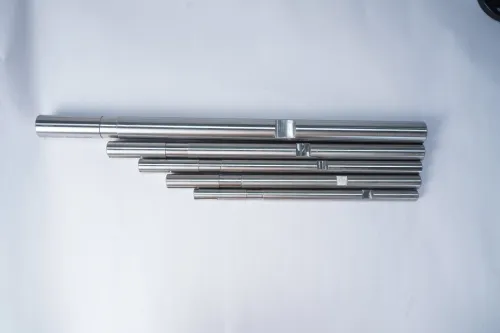
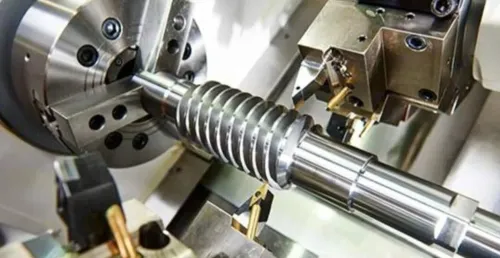
Efficient Precision & System Pvt.Ltd may be worth assessing for a drawing-controlled machined replacement, but acceptance still depends on the supplier’s application data rather than machining accuracy alone.
Install only after lockout, isolation, draining, venting, cleaning, and zero-energy verification. A tool-free magnetic attachment is not proof that the equipment is safe to open or that the plug will hold pressure.
After installation, verify the replacement in this order:
- Confirm the entire seal face contacts sound metal with no crack, burr, paint ridge, or visible gap
- Mark the plug and adjacent surface, then check for movement after expected vibration or thermal cycling
- Perform a controlled leak or pressure test specified for the equipment and fluid
Do not pressure-test an unverified temporary repair. Treat compressed gas, vacuum, oxygen, hydrogen, and hazardous chemical service as application-specific exclusions until the manufacturer supplies a written procedure.
Related product
 | Sliding head parts A Magnetic Pipe Plug is a specially constructed plug that seals pipe holes while also attracting and trapping ferrous (iron-based) particles in... View product → |
Frequently asked questions
How do you find the leak source before attaching a magnetic pipe plug?
Clean and dry the area, then trace fresh fluid back to its highest visible point. Check nearby fittings, threads, welds and cracks instead of plugging the nearest opening.
How do you match a magnetic pipe plug to equipment?
Confirm the opening diameter, thread form and pitch, sealing-face shape, insertion depth and surrounding clearance. A plug that attracts to the housing can still fail if its seal does not cover the escape path.
What compatibility checks does a magnetic pipe plug require?
Check the plug’s pressure rating, temperature range and compatibility with the leaking fluid as separate requirements. Do not treat magnetic attraction as proof of sealing performance.
When can a magnet create a new risk?
A magnet helps when it keeps the plug seated and does not interfere with equipment. Reject it when it attracts ferrous chips, affects sensors, complicates removal or cannot withstand operating conditions.