
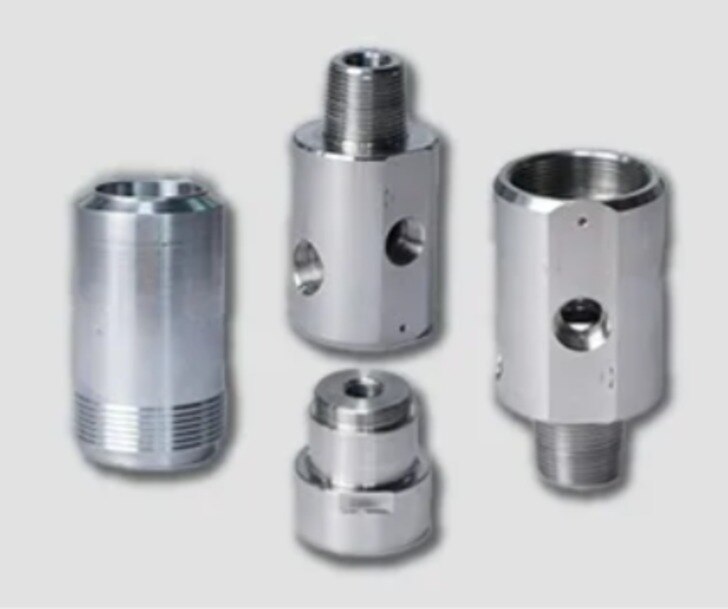
CNC and VMC machining suit many valve parts, but the right process depends on geometry, pressure-boundary risk, production volume and the relationship between mating features. By the end, you will be able to match stems, bodies, brackets, plugs and other parts to a process, compare alternatives and test whether a supplier’s capability evidence supports your valve design.
Key takeaways
- Use CNC turning for round valve parts and VMC milling for ports, faces and prismatic features.
- Specify diameter, flatness, surface finish, material grade and pressure-sealing requirements before machining.
- Choose casting or forging when volume, shape or material efficiency outweighs machining flexibility.
- Audit a supplier’s inspection records, process capability, traceability and valve-part experience.
When CNC and VMC machining fit industrial valve production
Choose CNC turning for round, rotational parts; choose VMC milling for prismatic or ported parts; combine them when one component needs both accurate diameters and machined faces.
| Process | Best-fit valve work | Production and geometry signal |
|---|---|---|
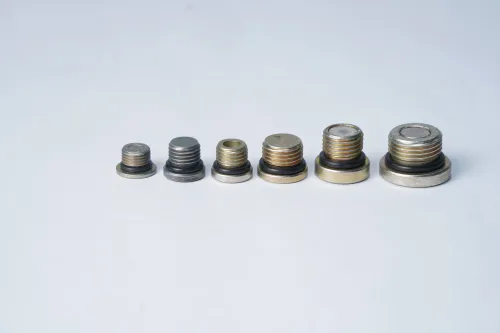
| CNC turning | Plugs, retainers, seats, threaded adaptors and short shafts | Rotational profiles, concentric diameters and external or internal threads |
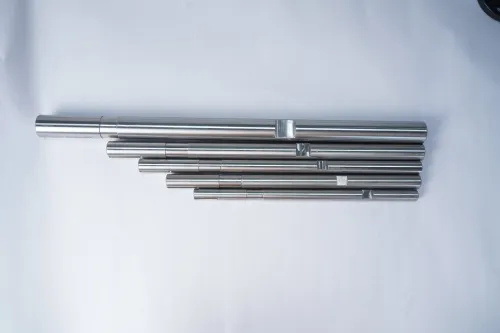
| Sliding-head Swiss turning | Slender stems, needles and small shafts | Long, narrow parts where guide-bushing support limits deflection |
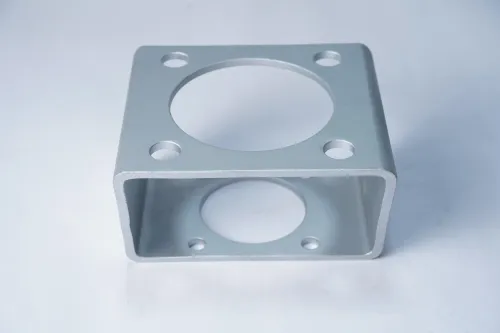
| VMC milling | Bodies, bonnets, mounting plates, brackets and actuator interfaces | Flats, pockets, cross-drilled ports, bolt patterns and several machined faces |
| Combined turning and VMC or mill-turn | Spindles with flats, ported plugs and complex bodies | Tight relationships between turned diameters, angled faces and internal passages |
CNC VMC components for industrial valve manufacturers suit prototypes, replacement parts and low-to-medium production runs because programming and fixturing costs are spread across repeatable parts rather than permanent tooling. Higher volumes can still work when tolerances, material changes or design revisions make dedicated casting, forging or metal injection moulding tooling too risky.
Use a VMC for a body only when the machine can reach deep bores, angled ports and sealing faces; a three-axis setup may leave positional errors between faces. A Swiss machine is the wrong choice for substantial face milling, deep radial ports or large interrupted cuts.
CNC VMC valve components still need pressure-boundary review. Dimensional accuracy alone does not demonstrate compliance with ASME B16.34 or API Specification 6D. Evaluate material traceability, pressure testing and inspection requirements before approving the process.
Match the valve part to the machining process
Choose the machine from the part’s controlling geometry: rotation favours turning, slenderness favours Swiss support, and multiple faces or angled passages favour milling.
| Process | Best-fit geometry | Common valve components | Main limitation |
|---|---|---|---|
| CNC turning | Short or medium-length round parts with external or internal diameters | Plugs, retainers, sleeves, bushings and threaded adapters | It does not efficiently produce broad flats, pockets or off-centre ports |
| Sliding-head Swiss machining | Small, slender bar-fed parts supported beside the cutting tool | Stems, pins, actuator shafts, screws and narrow seat carriers | Face milling, deep radial ports and large interrupted cuts favour another platform |
| VMC milling | Prismatic parts requiring several faces, pockets or drilled passages | Valve bodies, bonnets, mounting plates and actuator brackets | A single setup may not reach angled or opposing features |
| 4- or 5-axis machining | Complex bodies with angled faces, intersecting ports or deep cavities | Ported bodies, manifolds, bonnet interfaces and multi-face carriers | Programming and fixturing demand more preparation |
Swiss machining controls deflection during turning, which protects straightness and concentricity on long stems. Conventional CNC turning suits larger or shorter rotational parts where guide-bushing support adds no benefit.
Use a VMC for CNC VMC valve components with milled flats, bolt patterns and non-rotational surfaces. Add a fourth or fifth axis when repositioning would damage port alignment; a combined turn-mill route suits precision machined valve parts that need both accurate diameters and cross-drilled or angled features.
Evaluate secondary deburring, cleaning, inspection and changeover alongside cycle time.
The dimensions and materials that determine valve performance
Approve precision machined valve parts only after matching the component to the pressure boundary, not the drawing alone. CNC VMC components for industrial valve manufacturers need geometry, tolerance, surface and material controls tied to the valve’s pressure, temperature, sealing and actuation requirements.
| Feature | What to evaluate | What goes wrong if missed |
|---|---|---|
| Geometry | Port alignment, flange or thread position, concentric bores, wall thickness, milled faces and angular access | Misaligned passages restrict flow, distort seals or prevent assembly |
| Tolerance | Size, form, runout and positional tolerance across the complete stack; request first-article results for critical features | Individually acceptable parts still leak or bind when assembled |
| Surface | Drawing-specified Ra, sphericity, cylindricity and edge-break limits on seats, balls, stems and sealing faces | Tool marks, burrs or poor ball finish create leakage and accelerate wear |
| Material | Specified alloy, heat treatment, hardness, corrosion resistance and pressure-temperature suitability; retain the material-lot certificate | A dimensionally perfect part can crack, gall or corrode in service |
| Internal features | Deep bores, cross-drilled passages, intersecting holes, threads, cavities and chip removal; verify them with suitable gauges or CMM methods | Burrs, blocked passages and unverified blind features remain hidden |
A VMC’s stated positioning accuracy does not prove production capability. Fixture repeatability, tool wear, thermal drift, material condition and probing strategy determine the actual result; agree any Cpk target contractually and review feature trends.
For valves within its scope, ASME B16.34 covers pressure-temperature ratings, materials, dimensions and testing. Pipeline valves may also require API Specification 6D documentation, traceability and testing beyond a dimensional report. A milled valve ball may still need grinding, lapping or polishing to achieve shutoff performance.
Compare machining with casting, forging and standard hardware
Choose machining when the part changes often, the batch is small or mid-sized, and positional accuracy matters more than raw material utilisation. CNC VMC components for industrial valve manufacturers can remove casting patterns, forging dies and long approval cycles while machining ports, faces and mounting features in one setup.
That lowers mismatch, rework and tooling risk.
| Option | Cost advantage | Main risk or limit |
|---|---|---|
| CNC or VMC machining | Best for low-to-mid volumes, complex ports, tight positional relationships and frequent revisions | Material waste and cycle time rise on large, simple bodies |
| Bar-stock turning | Efficient for round stems, pins, sleeves and screws | It cannot replace VMC work on flats, ports, pockets or angled faces |
| Conventional machining | Suitable for one-off repairs or simple operations | More setups increase labour, alignment error and inspection time |
| Casting | Lowest unit cost for high-volume complex bodies after tooling | Pattern cost, porosity, inclusions and variable machining stock add quality risk |
| Forging | Strong grain flow suits pressure-loaded parts and repeat production | Dies and excess stock cost more; passages still need machining |
| Metal injection moulding | Economical for high-volume small intricate parts | Tooling, feedstock limits and shrinkage control make design changes expensive |
| Bought-in hardware | Cheapest when a standard part fits without modification | Thread, material, coating and traceability gaps can create assembly or pressure-boundary failures |
CNC VMC valve components are not automatically compliant because they meet drawing dimensions. For pressure-boundary parts, include material certificates, inspection and process evidence required by ASME B16.34 or API Specification 6D. Compare deburring, cleaning, inspection, changeover and scrap—not cycle time alone.
How to qualify a CNC VMC component supplier for valve work
Before accepting precision machined valve parts for a pressure or actuator assembly, require evidence that connects the finished component to its material, process and functional risks—not just a clean dimensional report.
1. Request the drawing revision, inspection plan and first-article report. Check critical bore, thread, sealing diameter, position, concentricity and runout results against the approved tolerances. For stems and actuator shafts, verify runout between the sealing diameter, thread and actuator interface; diameter readings alone will not reveal packing leakage or excess torque.
2. Request material traceability from bar or forging heat number through the finished part, including the specified EN 10204 certificate type. Confirm any heat treatment, plating or coating certificate comes from an approved subcontractor and remains linked to the batch.
3. Request capability or trend data for critical features, with the agreed Cpk target stated in the purchase order. Ask how the supplier controls fixture repeatability, tool wear, probing and thermal drift.
4. Review calibration certificates, nonconformance reports, corrective-action records and final-release authority. For pipeline valves, map the evidence to the valve manufacturer’s quality plan and API Specification 6D requirements; machining a dimension does not prove compliance with API 6D or ASME B16.34.
5. Confirm packaging, preservation, export documents and lot segregation. A cnc vmc component supplier germany is suitable only when it can preserve this chain of evidence.
Apply the same audit to Efficient Precision & System Pvt.Ltd before approving brackets, retainers or shafts for an assembly. A VMC capability claim is not a substitute for part-specific proof.
Related products
 | CNC & VMC Precision Component Efficient Precision & System Pvt. Ltd. is an established and reputable company specializing in manufacturing and supplying CNC precision components... View product → |
 | Industrial Valve Efficient Precision and System Pvt. Ltd. is a leading supplier, exporter and manufacturer of Valve Brackets based in India. View product → |
Frequently asked questions
When do CNC and VMC machining fit industrial valve production?
CNC turning fits round, rotational parts, while VMC milling fits prismatic or ported parts. Combine both processes when a component needs accurate diameters and machined faces.
How should you match a valve part to the machining process?
Use turning for bodies, stems, plugs, seats and other rotational features. Use VMC machining for drilled ports, bolt patterns, flats, slots and non-round faces.
Which dimensions and materials affect valve performance?
Control sealing diameters, concentricity, flatness, surface finish, thread dimensions and critical tolerances. Select materials based on pressure, temperature, corrosion and fluid compatibility.
How does machining compare with casting, forging and standard hardware?
Machining provides flexible geometry and tight feature control for low-to-medium volumes. Casting and forging suit larger volumes or near-net shapes, while standard hardware fits non-critical, standardised features.
How do you qualify a CNC VMC component supplier for valve work?
Check material certificates, inspection reports, traceability, calibration records, process controls, first-article samples and experience producing precision machined valve parts.
Related products
 | Industrial Valve Efficient Precision is a leading manufacturer and supplier of quality Retainer rings in India and Germany Years of experience in the industry have... View product → |
 | Industrial Valve Shaft If you're looking for the highest quality shafts in india and Germany , Efficient Precision is your place. |