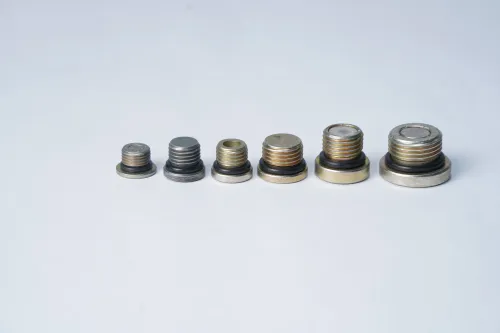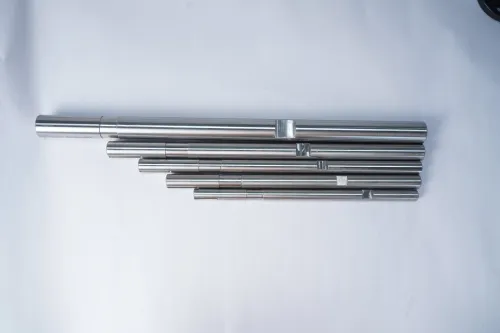

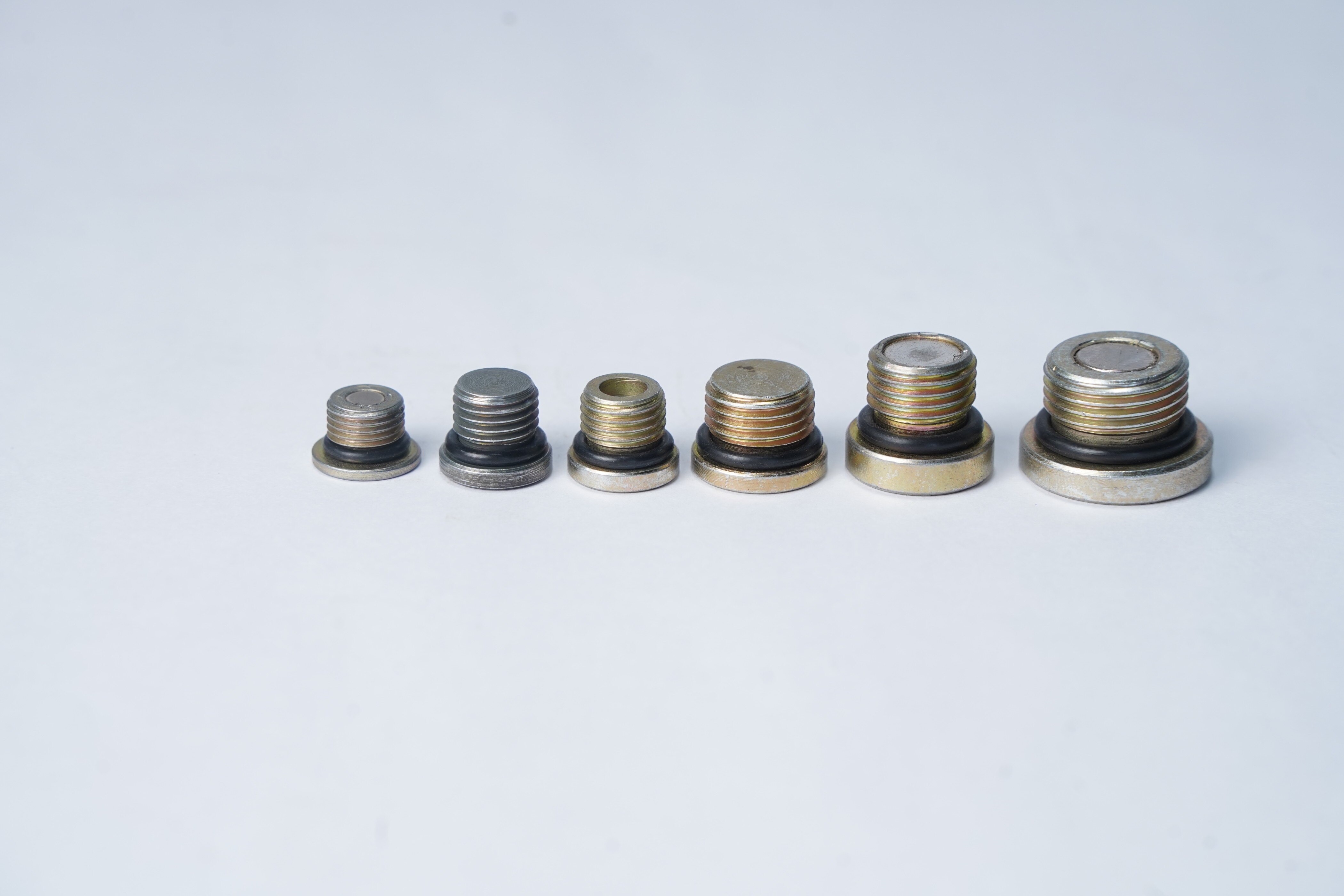
Remove the plug without disturbing its evidence, document the collected debris, and inspect the magnet, threads, sealing feature, and body before deciding whether it can return to service. By the end, you will have a repeatable pipe plug condition check, a method for testing magnetic strength, and clear replacement triggers.
Key takeaways
- Record plug location, service date, fluid, operating conditions, and debris before cleaning.
- Separate normal wear particles from flakes, chips, corrosion products, and possible component damage.
- Check magnet retention, threads, sealing surfaces, and plug body for serviceability.
- Replace the plug when magnet loss, damaged threads, cracks, or sealing defects threaten containment.
When to Remove the Plug and What to Record First
A magnetic pipe plug inspection checks the ferromagnetic particles collected by the plug; it is not magnetic-particle testing (MT/MPI). MT examines surface and near-surface discontinuities in ferromagnetic parts, so inspect the pipe, valve body, or plug separately when that examination is required.
Inspect the plug at the planned oil or coolant change and after filter replacement, overheating, a contamination alarm, abnormal pressure loss, or any suspected internal damage. Before removal, isolate the equipment, depressurize and cool it, then prepare a clean, non-ferrous tray and camera.
- Record the equipment ID, plug location, removal date, operating hours, service interval, fluid, filter condition, and reason for inspection.
- Photograph the installed plug and deposit before touching it. Capture the amount, distribution, colour, and character: fine uniform paste, bright chips, flakes, thread fragments, or unusually large pieces.
- Loosen the plug with the specified tool while keeping the deposit undisturbed. Do not wipe the magnet, drag it across the port, or place it on a steel bench.
- Transfer loose material to a labelled clean container. Weigh it where practicable, and record whether particles were concentrated at the magnet, spread across the sealing face, or mixed with sludge.
- Compare the finding with previous plug records and filter debris. A sudden increase matters even when the plug still seals.
After documentation, clean the plug with a process-compatible solvent and lint-free wipe. Keep ferrous tools, steel brushes, and contaminated surfaces away; they can add particles and create a false indication. Acceptance must follow the drawing, purchase specification, thread and material standards, and the owner’s maintenance procedure.
How to Clean the Plug and Interpret the Debris
Magnetic pipe plug inspection examines ferromagnetic debris collected by the service magnet. It is not magnetic-particle testing (MT or MPI), which uses controlled magnetization to find surface and near-surface flaws in ferromagnetic parts. A plug inspection does not replace MT of the pipe, valve body, or plug.
1. Keep the removed plug over a clean, nonferrous tray. Do not wipe the magnet, tap it against steel, or place it on a contaminated bench. Photograph the deposit beside a scale, and weigh it after collection when practicable.
2. Separate loose sludge from particles attached to the magnet. Record the deposit’s colour, amount, location, and texture, then collect loose material in a labelled container. Note the service hours, oil or coolant condition, and filter findings.
3. After documentation, clean the plug with a process-compatible solvent and lint-free wipe. Avoid steel brushes and ferrous tweezers; they add particles and create a false indication. A clean magnet does not prove that the system is free of wear because aluminum, copper, brass, and many stainless-steel products are nonferrous.
4. Interpret the pattern against previous records. Fine, uniform grey paste points to normal fine wear or settled contamination; bright steel chips indicate active cutting, impact, or machining damage. Brass or copper particles suggest wear of a nonferrous bearing, cage, or fitting. Thread fragments indicate damaged engagement, while unusually large ferrous pieces demand immediate investigation.
If the plug itself requires MT, clean and magnetize it in suitable directions because one direction can miss an unfavourably oriented crack.
How to Check the Magnet, Threads, Seal, and Plug Body
Magnetic pipe plug inspection means checking a service plug that collects ferromagnetic particles; it is not magnetic-particle testing (MT or MPI). A pipe plug condition check does not replace MT of the plug, pipe, or valve body, which requires prepared surfaces and magnetization in suitable directions.
Reject the plug for reuse when you find any of these defects:
- A loose, cracked, disbonded, unusually weak, or moving magnet, or a magnet no longer retained in its pocket.
- Cracks, deep pitting, corrosion that reduces wall thickness, or a deformed plug body.
- A damaged, burred, cross-threaded, flattened, or partially stripped thread.
- A gouged, distorted, or uneven sealing face.
- A hardened seal that is cut, flattened, swollen, split, or permanently compressed.
- Bright impact marks showing that the plug bottomed before its seal engaged.
Do not accept a damaged metal sealing surface merely because a new gasket fits. Record the defect and replace the plug; a gasket cannot restore thread engagement or sealing geometry.
| Sealing arrangement | Verify before refitting | Reject or correct if |
|---|---|---|
| Tapered pipe threads | Confirm the specified sealant and inspect the taper for damage | Threads are damaged, or tape or compound is being used in place of the specified sealant |
| Parallel threads | Confirm the required gasket, bonded seal, or O-ring and its seating surface | The seal is missing, incompatible, cut, or the face is deformed |
| Any arrangement | Check the magnet-retention design and seal contact marks | The plug shows movement, leakage evidence, or bottoming before sealing |
A clean magnet does not prove clean equipment: aluminum, copper, brass, and many stainless-steel particles will not be captured.
How to Test Magnetic Strength and Confirm Serviceability
A steel tool only proves attraction at one distance; it does not prove retention during vibration or establish field strength. For a defensible pipe plug condition check, use the product’s specified pull-force or field-strength limit, not a guessed value based on plug size.
1. Clean and dry the magnet, then inspect its pocket. Confirm that it cannot rotate, lift, rattle, or move under the manufacturer’s specified retention check. A loose, cracked, disbonded, or unusually weak magnet fails serviceability.
2. Measure performance with a calibrated gaussmeter at the specified pole location, or measure pull force with a calibrated force gauge and a defined ferromagnetic target. Record the instrument ID, target size, contact condition, reading, and acceptance limit.
3. Compare every reading with the manufacturer’s data or approved maintenance procedure. No universal gauss or pull-force value can be inferred from appearance. If no limit exists, quarantine the plug for engineering disposition.
4. If cracking is suspected, request magnetic-particle testing, or MT, as a separate examination of a ferromagnetic plug. Prepare the surface and magnetize in suitable directions; one direction can miss an unfavourably oriented flaw. Do not use MT for an austenitic stainless-steel plug.
Conclude serviceability only after the specified leak or pressure test under the equipment procedure. A strong magnet cannot compensate for a damaged seal or inadequate thread engagement. Remove residual magnetism when the service procedure requires it.
When Magnetic Pipe Plug Replacement Is the Safe Decision
Replace the plug if the magnet is loose, cracked, disbonded, unusually weak, or no longer retained in its pocket. Reject it after thread damage, a bent body, a scored sealing face, dimensional drift, or any gasket or O-ring that is compressed, cut, flattened, hardened, swollen, or chemically attacked.
- Compare the plug with the component drawing, purchase specification, material specification, applicable thread standard, and equipment owner’s maintenance procedure. Check thread type and pitch, pitch diameter or gauge fit, overall length, sealing face, groove, chamfer, required runout, and magnet-pocket retention.
- Install a new seal whenever the old one shows damage or has taken a permanent set. Do not accept a plug because it screws in smoothly; a go/no-go thread result does not confirm sealing-face condition or internal magnet security.
- Verify the replacement magnet’s retention and its product-specific field-strength or pull-force limit. Do not invent a universal value from visual appearance. Magnetic-particle testing is a separate examination; arrange MT for the plug, pipe, or valve body when cracking or other discontinuities require investigation.
- Before reinstalling, confirm cleanliness, correct material, thread engagement, torque, seal type, and any residual-magnetism control required by the equipment procedure. Record the plug identification, dimensions or gauge result, magnet test, seal change, torque, date, technician, and disposition.
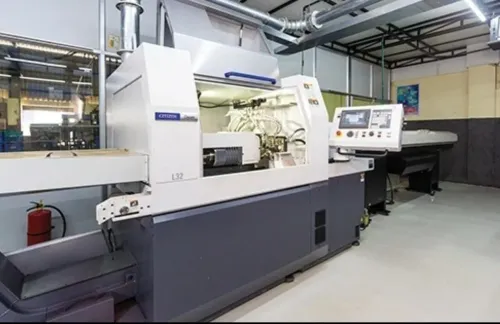
For Düsseldorf work, “magnetic pipe plug for inspection after service düsseldorf” and “precision machined pipe plug germany” describe sourcing, not acceptance. Efficient Precision & System Pvt.Ltd can manufacture close-tolerance parts, but your drawing and maintenance procedure decide reuse.
Related product
 | Sliding head parts A Magnetic Pipe Plug is a specially constructed plug that seals pipe holes while also attracting and trapping ferrous (iron-based) particles in... View product → |
Frequently asked questions
What should you record before removing a magnetic pipe plug?
Record the plug location, service date, equipment identity, fluid, operating conditions, plug orientation, and debris appearance before cleaning.
How do you interpret debris collected by a magnetic pipe plug?
Fine paste-like particles can indicate routine wear, while bright chips, flakes, needles, or sudden heavy deposits require investigation of the pipe or valve system.
Is magnetic pipe plug inspection the same as magnetic-particle testing?
No. A plug inspection evaluates collected ferromagnetic debris and plug condition. Magnetic-particle testing examines surface and near-surface discontinuities in a separate ferromagnetic part.
What parts of a magnetic pipe plug need checking?
Inspect the magnet, threads, sealing face or gasket, retaining features, and plug body for looseness, damage, corrosion, cracks, and distortion.
When is magnetic pipe plug replacement the safe decision?
Replace the plug when the magnet is loose or weak, threads are damaged, the body is cracked or distorted, or the sealing surface cannot provide reliable containment.