
A fast purchase starts by defining the plug more precisely than “magnetic pipe plug.” You need to compare German manufacture, Mannheim-area logistics, thread and sealing fit, magnet construction, pressure and temperature evidence, and the inspection data required for repeat valve production.
Key takeaways
- Define thread, bore, length and seal dimensions before requesting quotes.
- Compare magnet retention, particle capacity and compatibility with the process fluid.
- Verify the supplier’s actual production site and delivery route from Mannheim.
- Use dimensional, magnetic and leak tests before approving production batches.
Define the magnetic pipe plug before you contact suppliers
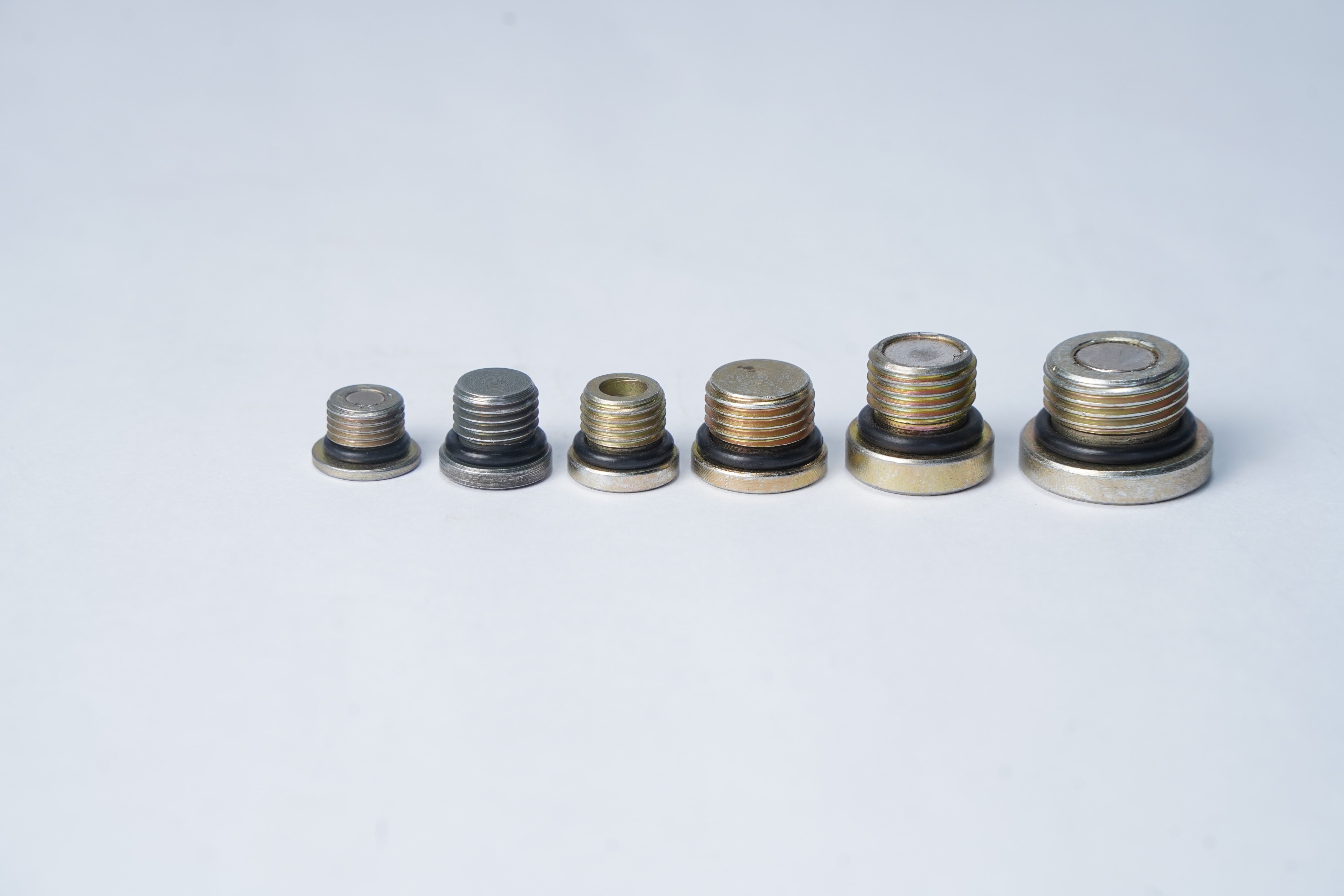
For valve bodies, manifolds and hydraulic blocks, specify a threaded plug with a permanent magnet that collects ferrous particles from a flowing medium. This is the relevant meaning of magnetic pipe plugs for valve manufacturers, not every product returned by the same phrase.
| Interpretation | What it means | Risk of a wrong result |
|---|---|---|
| Threaded debris-collection plug | Permanent magnet attracts iron or steel particles | Suitable starting point |
| Magnetic drain plug | Plug fitted to a drain or sump | May not match valve geometry |
| Temporary pipe stopper | Closes an open pipe during work | Usually unsuitable for pressure service |
| Magnetic-particle inspection equipment | Detects surface and near-surface flaws | Not a plug or pressure component |
A magnet will not capture brass, copper, aluminium, plastics or most austenitic stainless-steel debris. Magnetic collection is not a defined-micron filter: particles must pass close enough to the field. Specify:
- Location, flow exposure and service medium
- Pressure pulses, temperature range and cleaning process
- Sensor proximity, including reed, Hall-effect or magnetic position sensors
- Thread and sealing requirements, plus exposed, encapsulated or mechanically retained magnet
Search for “Magnetstopfen,” “Magnetablassschraube,” “Magnetverschlussstopfen,” “Rohrstopfen mit Magnet” and “Magnetstopfen nach Zeichnung” with Mannheim, Rhein-Neckar, Baden-Württemberg and Deutschland. “magnetic pipe plug manufacturer germany” alone can return pipe-stopping or inspection products instead of small turned valve components.
Put every fit and sealing dimension on the drawing
An M20 plug is not interchangeable with G3/4 or 3/4-14 NPT. M20 identifies a metric nominal diameter, while G3/4 identifies BSPP and 3/4-14 NPT identifies an American tapered thread with 14 threads per inch. A quotation is comparable only when the thread and sealing systems match.
| Thread option | Drawing must state | Why nominal size is insufficient |
|---|---|---|
| Metric parallel | M20, pitch in millimetres, tolerance/class, engagement and thread length | It seals at a face or washer, not through taper interference |
| Metric tapered | Standard designation, pitch, tolerance/class, engagement and thread length | Taper and installation torque affect seating |
| BSPP, BSPT or NPT | G/R/NPT designation, nominal size, pitch or TPI, class, engagement and thread length | BSP and NPT profiles and angles are different |
List every fit characteristic on the STEP or DXF drawing and mark each critical characteristic:
- Plug length, maximum outside diameter, head or drive style, wrench size, installed orientation, concentricity or runout
- Magnet diameter, pocket depth, remaining wall thickness and flow-clearance limit
- Sealing-face diameter and width, plus the selected bonded washer, O-ring, metal face seal, thread sealant or tapered-thread interference
- Groove width, groove depth and specified seal compression target
Show the pocket away from the flow path and deep enough for full seating without leaving a wall too thin for crimping or retention.
Include the marked drawing, material and heat-treatment condition, surface finish, burr limit and cleanliness requirement in the RFQ sent to a magnetic pipe plug supplier near Mannheim seeking magnetic pipe plugs for valve manufacturers.
Compare magnet strength, retention and fluid compatibility
Specify the magnet, not just “strong.” Ask an industrial magnetic pipe plug supplier for material and grade, diameter, length, polarity or orientation, maximum operating temperature, coating or encapsulation, and the retention method for your sliding-head magnetic pipe plugs.
| Material | Advantage | Limitation |
|---|---|---|
| Neodymium | Highest magnetic energy in a compact size | Loses performance at elevated temperature and needs corrosion protection |
| Ferrite | Lower cost and good temperature stability | Lower magnetic energy requires more space |
| Samarium-cobalt | Higher-temperature and corrosion-sensitive service | Brittle and more expensive |
An exposed magnet is easy to inspect and clean, but corrosion and impact can damage it. Bonding simplifies assembly; qualify the adhesive against pressure pulses, heat and cleaning chemistry. Encapsulation improves corrosion resistance but increases size and can reduce direct particle contact.
A swaged lip, crimp, retaining cap or positive mechanical stop gives stronger protection against a loose magnet entering a valve or orifice.
Request a pressure rating with its pressure-temperature basis: magnet grade does not establish pressure capability. Match NBR, FKM or EPDM seals to oil, petrol, coolant or hydraulic fluid, then obtain the compatible temperature and chemical range. Include seal compound, coating and encapsulation in the approval record.
Compare Mannheim-area suppliers by real production location and delivery route
“Near Mannheim” can mean factory-made locally, stocked nearby, or merely shipped quickly. Compare the route, not the postcode.
| Supplier category | Supplier address | Manufacturing country | Dispatch location and local inventory | Sample / repeat lead time | Minimum order | Subcontracted operations | Technical drawing and RFQ route |
|---|---|---|---|---|---|---|---|
| Efficient Precision & System Pvt.Ltd | Mannheim, Germany; verify street address | Confirm with supplier | Confirm factory stock and dispatch point | Request quoted days / days per repeat lot | Request quantity | Confirm machining, magnet insertion and inspection | Named technical contact and direct RFQ email |
| Mannheim distributor | Exact Mannheim address; verify | Ask for factory country | Mannheim stock may exist | Stock release / supplier replenishment | Stock quantity or pack size | Ask who controls machining, retention and inspection | Named application engineer, drawing email |
| Baden-Württemberg manufacturer | Exact factory address; verify | Germany or stated country | Factory dispatch; confirm local stock | Request quoted days / days per repeat lot | Request quantity | Ask about every secondary operation | Technical sales engineer and RFQ portal |
| Overseas shipper | Quoted registered address | Stated country | Import dispatch; no Mannheim stock assumed | Request transit-inclusive days / repeat schedule | Request quantity | Identify each subcontractor | Named export contact and controlled drawing channel |
Ask directly whether sliding-head or Swiss-type turning, magnet insertion, staking, crimping, bonding, encapsulation and final inspection are internal. A local distributor can hold parts without custom retention or drawing control.
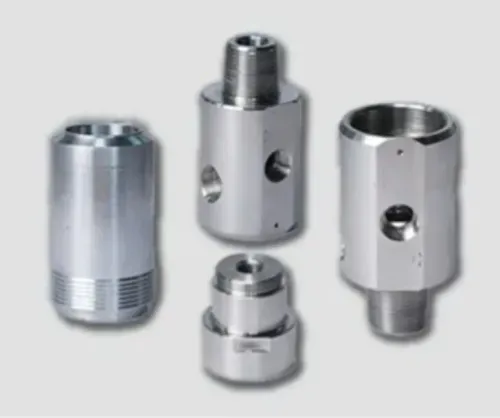
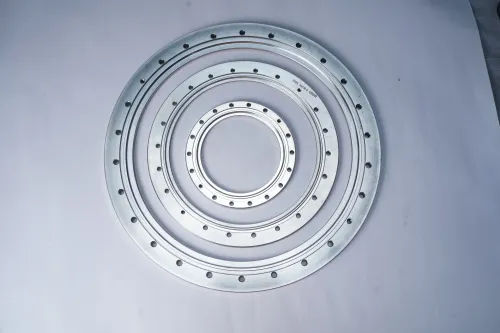
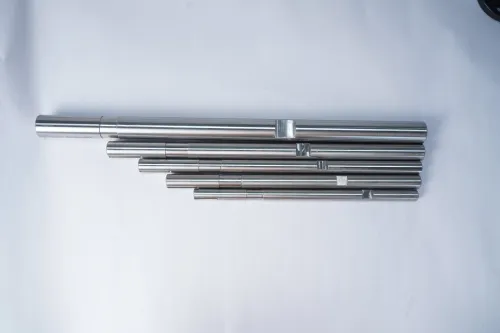
Efficient Precision & System Pvt.Ltd is a relevant contact for small, slender turned valve components requiring secondary magnet-retention work, but request its exact production location and capacity. Use the same drawing and acceptance criteria with every magnetic pipe plug supplier near Mannheim, including any industrial magnetic pipe plug supplier or magnetic pipe plug manufacturer Germany.
Related product
 | Sliding head parts A Magnetic Pipe Plug is a specially constructed plug that seals pipe holes while also attracting and trapping ferrous (iron-based) particles in... View product → |
Set acceptance tests that keep fast valve production reliable
Approve samples against a written plan before releasing repeat lots of sliding head magnetic pipe plugs. The same plan must govern magnetic pipe plugs for valve manufacturers, not a supplier’s informal “strong magnet” claim.
1. Inspect turned-part dimensions, thread gauges, sealing-face diameter and width, concentricity or runout, burr limits, surface finish, material grade and heat-treatment condition. Record certificates for material and heat treatment.
2. Verify magnet presence, polarity and orientation. Record pull force at a fixed distance against a named steel target, using the same calibrated method for supplier and buyer; distance, target material and test method make results comparable.
3. Test retention with a defined pull-out force or pressure-and-vibration proof test, then leak-test the assembled plug where the application requires it. Check for loose magnetic debris after assembly and washing.
4. Define the ferrous-particle size range the application must retain and the debris loading that triggers cleaning or replacement. A magnetic plug has no automatic micron rating: it does not guarantee capture of particles that pass outside its effective field or remove nonferrous contamination.
5. Specify packaging that prevents parts attracting one another, lot traceability, certificates and cleanliness records. State any demagnetisation requirement near reed switches, Hall sensors or magnetic position sensors.
6. Require first-article approval for repeat orders and written change notification for magnet grade, seal compound, retention process, plating or subcontractors. Reject unapproved changes before assembly.
Frequently asked questions
What should you define before contacting a magnetic pipe plug supplier?
State the plug thread, engagement length, head or drive form, sealing method, overall length, bore limits and installation space on the drawing.
How do you compare magnetic pipe plugs for valve manufacturers?
Compare magnetic retention, particle capacity, magnet protection, temperature rating and compatibility with the hydraulic or process fluid.
How can you assess a magnetic pipe plug supplier near Mannheim?
Check the supplier’s real production location, machining capability, stock position, dispatch point and delivery route to your plant.
Which acceptance tests support reliable fast valve production?
Test thread fit, key dimensions, seal performance, leak tightness, magnet retention and particle collection against documented limits.